October 23, 2026
It’s election season—not just in the United States, but in several important democracies around the world over the next month. From Israel and Spain to Brazil and New Zealand, these elections could shape relationships with Israel, responses to antisemitism, and the future of international alliances. AJC’s global experts are tracking each cycle. Here’s what they’re watching and why it matters.
Key Takeaways
- Israel: The next government will face pressure to restore public trust, strengthen U.S.-Israel relations, and advance regional cooperation through the Abraham Accords.
- United States: The 2026 midterm elections will test bipartisan support for Israel as antisemitism and domestic economic concerns shape the political debate.
- Spain: The November 29 election could reshape Spain’s relationship with Israel and influence how the next government addresses rising antisemitism.
- Brazil: The presidential runoff could significantly change Brazil’s diplomatic relationship with Israel and its broader foreign policy alignment.
- New Zealand: The November 7 election could determine whether the country maintains its current approach to Israel, terrorist designations, and support for Jewish community security.
Israel: Can the Next Government Restore Public Trust and Advance Regional Integration?
By Lt. Col. (Res.) Avital Leibovich, Director, AJC Jerusalem
As Israelis prepare to head to the polls, the key question is not simply which party will win, but who can build a stable governing coalition. Israel’s electoral system means the largest party does not necessarily determine who governs. Voter turnout, particularly among Arab and ultra-Orthodox communities, and whether smaller parties cross the electoral threshold could prove decisive.
The Next Government’s Domestic Challenges
Beyond the election results, the next government will face critical challenges:
- restoring public trust after October 7;
- addressing the unequal burden of military service; and
- giving Israelis a renewed sense of security and shared purpose.
U.S.-Israel Ties Remain Critical
Israel’s relationship with the United States will remain indispensable regardless of who forms the next government, but shared strategic interests do not eliminate potential disagreements.
Decisions on Gaza, settlements, democratic institutions, and regional diplomacy could strengthen bilateral cooperation or deepen tensions. Rebuilding and preserving bipartisan support in Congress and rebuilding connections with American society—including younger Americans and American Jews—will also be strategic priorities. A government that combines a firm approach to security with a credible diplomatic horizon will be better positioned to sustain that support.
The Regional Stakes
The election will also help shape the broader Middle East. Iran and its proxies will remain central security challenges, but deterrence alone cannot determine the region’s future. The next government could help advance the Abraham Accords, pursue normalization with Saudi Arabia, and expand cooperation in energy, water, trade, and infrastructure. Progress will depend not only on Israel’s choices, but also on Arab partners, sustained American engagement, and a workable approach to the Palestinians.
Ultimately, the election will help determine whether Israel can translate its military strength into lasting political achievements—and whether the coming years bring deeper regional integration and expanded normalization.
How Israel and Antisemitism Are Shaping the 2026 U.S. Midterm Elections
By Rebecca Yoskowitz Klein, Director, National Political Outreach and Jessica Bernton, Director, Congressional Affairs
The 2026 U.S. midterm elections will shape not only the balance of power in Washington, but also the debate over America’s role in the world, support for democratic allies, and the state of civic discourse at home.
The Future of U.S.-Israel Ties
For the Jewish community, several issues warrant close attention. One is the future of bipartisan support for the U.S.-Israel relationship. While many elected officials in both parties continue to support Israel, debates over U.S. foreign policy, military assistance, and America’s global commitments are evolving and dramatically shaping political dynamics. The key question is whether support for Israel will continue to be viewed as a bipartisan national interest amid growing political divides on the topic. Additionally, several Democratic Socialists of America (DSA)-backed candidates who have called for restricting or ending U.S. military aid to Israel are also positioned to win congressional seats, potentially intensifying debates within the Democratic Party over Israel policy.
Antisemitism on the Campaign Trail
Antisemitism has also become a more visible feature of the 2026 election cycle. Jewish lawmakers and candidates have faced threats, harassment, and antisemitic abuse. A September 2026 Jewish Electorate Institute poll found that 57% of Jewish respondents believed antisemitism was increasing in the Democratic Party, while 60% said it was increasing in the Republican Party.
Domestic Issues Still Dominate
At the same time, most voters remain focused on domestic concerns, particularly affordability, health care, energy costs, and economic opportunity. The war with Iran has added to these concerns, including through its impact on energy prices and household costs. President Donald Trump will continue to shape many races, with voters weighing his leadership, policies, and handling of the conflict with Iran. Separately, the elections will test whether candidates can offer pragmatic solutions to voters’ everyday concerns and demonstrate effective governance.
Can Candidates Bridge the Divide?
Political polarization remains a defining feature of American politics, but the loudest voices do not necessarily represent the majority. Many Americans continue to value leaders who can build coalitions, deliver results, and work across party lines. The strength of the political center—and the willingness of elected officials to work across partisan divides—may prove as consequential as the outcome of any individual race.
Will Spain Remain One of Israel’s Sharpest Critics?
By Zach Blaifeder, AJC Associate Director, Arthur and Rochelle Belfer Institute for Latino and Latin American Affairs (BILLA)
Spain’s November 29 general election will test whether the right-wing opposition can capitalize on its recent momentum and form the next government, potentially with the support of the far-right Vox party. On the left, the key question is whether parties advocating expanded social welfare, economic reforms, and Palestinian statehood can overcome internal divisions and unite behind a common political platform. Recent polling has generally placed the right-wing opposition ahead, although the outcome will depend in part on how the parties perform and whether they can secure the support needed to govern.
Implications for Spain’s Relationship With Israel
The election could also have significant implications for Spain’s relationship with Israel. Relations have deteriorated sharply since the October 7 Hamas massacre of Israelis, with Prime Minister Pedro Sánchez emerging as one of Israel’s most vocal critics in Europe. Some critics argue that Sánchez’s rhetoric and policies toward Israel also serve domestic political interests, including appealing to left-wing coalition partners and charges of corruption against those close to him, including his wife. If a right-wing government takes power, relations with Israel could improve, although the extent of any change would depend on the composition of the governing coalition. Parties on the Spanish right have criticized what they view as unfair international condemnation of Israel’s response to the October 7 massacre of Israelis. However, Vox in its beginnings was allied with Neo-Nazi rhetoric and in the last years has attempted to sanitize its antisemitic image.
Antisemitism Raises Concerns for Spanish Jews
For Spain’s Jewish community, the election comes amid growing concern over antisemitism and the spillover of the Israeli-Palestinian conflict into domestic politics. The Federation of Jewish Communities of Spain reported 221 antisemitic incidents in 2025, a 14.5% increase from the 193 recorded in 2024. Separate figures from Spain’s Interior Ministry also showed an increase in antisemitic hate crimes and incidents. Jewish community leaders have warned that hostility toward Israel can spill over into antisemitism, with Jews being targeted for Israel’s actions regardless of their own views or connections to the country. Whoever forms the next government should take clear and consistent action against antisemitism, ensure the security of Jewish communities, and avoid exploiting the Israeli-Palestinian conflict for domestic political gain.
Brazil’s Election Could Upend Its Relationship With Israel
Muriel Asseraf, AJC Brazil Representative
Brazil’s presidential runoff could significantly reshape the country’s relationship with Israel. The key question is whether right-wing candidate Flávio Bolsonaro can turn his first-round lead into victory, or whether incumbent President Luiz Inácio Lula da Silva can close the gap by mobilizing voters who abstained or cast blank ballots in the first round. Bolsonaro received 47.03% of the vote, compared with Lula’s 45.16%. The electoral map remains deeply polarized: Bolsonaro carried 14 states and the Federal District, while Lula won 12 states and remains particularly strong in the Northeast. Recent polling points to a competitive runoff, making the candidates’ ability to attract voters beyond their respective ideological bases especially important.
A Potential Shift in Ties With Israel
The outcome could have significant implications for Brazil’s relationship with Israel. Under Lula, diplomatic relations have deteriorated sharply. Flávio Bolsonaro, by contrast, has expressed strong support for Israel and pledged to move Brazil’s embassy to Jerusalem if elected. A Bolsonaro victory could therefore mark a substantial shift in Brazil’s diplomatic approach to Israel.
The U.S. Relationship Is Also at Stake
The election could also reshape Brazil’s relationship with the United States. A Bolsonaro presidency would likely seek closer alignment with Washington, potentially reinforcing a shift toward closer ties with Israel. Lula, meanwhile, has pursued a more independent foreign policy and closer engagement with countries across the Global South.
Brazil’s Jewish Community Watches Closely
For Brazil’s Jewish community, the stakes extend beyond the country’s bilateral relationship with Israel. Antisemitism, political polarization, and the spillover of the Israeli-Palestinian conflict into domestic debate are also important concerns. Relations between Lula and organized Brazilian Jewry have deteriorated significantly, as his rhetoric and positions on Israel have drawn repeated criticism from Jewish communal institutions. Flávio Bolsonaro, meanwhile, has signaled an interest in strengthening ties with Jewish community leaders. He has named prominent Jewish communal leader Cláudio Lottenberg as his prospective health minister should he win the election.
Brazil’s Jewish community, which is politically diverse, will be watching to ensure that Bolsonaro’s evangelical supporters do not use Jewish and Israeli symbols to promote their own religious and political agendas, as happened under his father.
New Zealand’s Election Could Test Its Support for Israel—and Its Fight Against Antisemitism
By Hana Rudolph, Associate Director, AJC Asia Pacific Institute
New Zealand’s general election will take place on November 7, and current polling suggests a tight race. The ruling center-right National Party and the opposition center-left Labour Party are each polling at around 28%, meaning both would need coalition partners to form a government.
The Election Could Shift New Zealand’s Israel Policy
The election results could significantly affect New Zealand’s relationship with Israel. Since taking office in November 2023, the current coalition government has made several important decisions on issues AJC has advocated for. These include designating Hamas, Hezbollah, and the Houthis as terrorist organizations. Previously, New Zealand distinguished between the military and political wings of Hamas and Hezbollah. In September 2025, New Zealand also broke with Australia, Canada, and the United Kingdom by choosing not to recognize a Palestinian state.
Opposition Parties Take a Different Approach
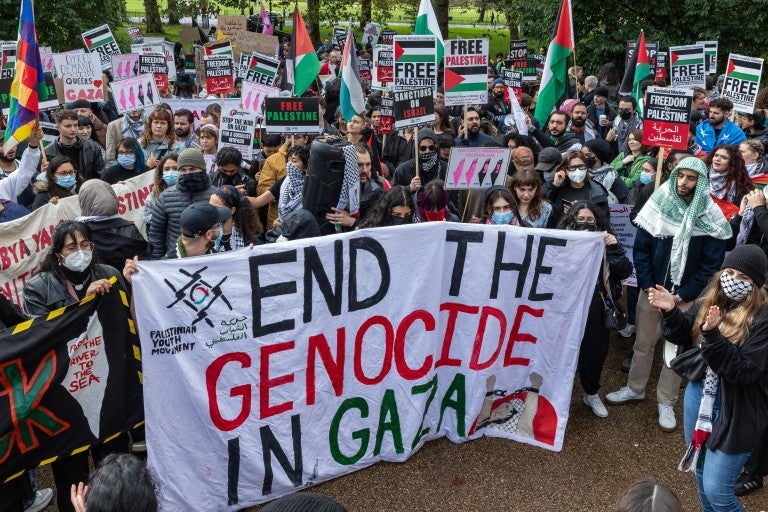
Opposition parties have been sharply critical of the government’s position. Labour and its expected coalition partner, the Green Party, have continued to falsely allege that Israel is committing genocide in Gaza and have called for recognition of a Palestinian state and sanctions against Israel. A new party will also appear on the ballot this year: the Palestine Free from the River to the Sea Party. The party has received taxpayer-funded election broadcasting assistance from the Electoral Commission, although it is not expected to meet the 5% threshold for entering Parliament.
Antisemitism Remains a Concern
As elsewhere around the world, rhetoric that demonizes and delegitimizes Israel can contribute to the targeting of Jewish communities. New Zealand’s Community Security Group recorded unprecedented levels of antisemitic incidents following Hamas’ October 7 massacre of Israelis and reported its highest annual total in 2025. Juliet Moses, president of the New Zealand Jewish Council, the country’s representative umbrella body for the Jewish community, has praised the current coalition government’s efforts to counter antisemitism. She has also emphasized the need for continued support for the community’s security needs, regardless of which parties form the next government.