June 13, 2025
Israel’s precise preemptive strike on Iranian nuclear and military targets, named Operation Rising Lion, is a decisive response to the escalating and imminent threat posed by the Iranian regime's nuclear weapons ambitions and regional aggression. After years of failed diplomacy, Iran has repeatedly defied international warnings, rapidly expanded uranium enrichment, and made alarming progress toward developing a nuclear weapon -- all while repeatedly calling for Israel’s annihilation. Coupled with direct missile and drone attacks on Israel in 2024 and the widening reach of Iran’s terror network, these actions left Israel with no choice but to act to protect its citizens and prevent a nuclear-armed Iran.
In response to Israel’s defensive measures, AJC CEO Ted Deutch stated, “The Iranian regime, which provides financial and material support to terrorist groups waging war on Israel, has repeatedly vowed to destroy the world’s one Jewish state. We stand firmly with Israel in its right to self-defense and remain vigilant in anticipation of any Iranian military or proxy retaliation.”
Here are five key reasons behind Israel’s strike and the factors driving the current escalation.
- An Imminent Threat: Iran’s Rapidly Advancing Nuclear Program and Ballistic Missile Development
In recent months, intelligence has revealed that Iran is nearing a critical nuclear threshold. Over the past six months, Iran has sharply escalated production of fissile material, generating about one bomb’s worth of 60% highly enriched uranium each month at its Fordow facility. The 60 percent enriched uranium can be quickly refined to the 90 percent threshold required for nuclear weapons.
According to IAEA data, Iran already possesses enough highly enriched uranium for 10 nuclear weapons. The IDF has assessed that Iran could build up to 15 bombs. Its growing stockpile, combined with fortified and dispersed underground enrichment facilities, puts the regime closer than ever to producing weapons-grade material.
Israeli Prime Minister Benjamin Netanyahu also said that Iran has built “a massive store” of ballistic missiles that are capable of carrying a nuclear warhead.
“These missiles reach Israel from Iran within minutes. Each one carries a ton of explosives.”
Iran planned to produce 20,000 such missiles within six years, Netanyahu asserted, “therefore we are operating to remove [them] as well.”
- Iran Defied International Community, Expanded Uranium Enrichment
On June 12, in direct defiance of the IAEA censure, Tehran announced it would further accelerate its nuclear program by opening a third, likely hardened, enrichment site and replacing basic centrifuges at Fordow with more advanced models to boost production of near-weapons-grade uranium.
Iran currently has two main enrichment sites. One is underground, at Natanz, while another is built deep into a mountainside, near the holy city of Qom, at Fordow. Iran kept the construction of Fordow secret for years before it was revealed by Western officials in 2009.
European allies joined in condemning the Iranian regime’s escalation. A French Foreign Ministry spokesperson said, “We strongly condemn these announcements.” At the same time, the EU’s top diplomat warned that Iran’s conduct deepens the crisis not only over its nuclear ambitions but also its destabilizing regional behavior.
Listen to AJC's People of the Pod
- International Community Censures Iran’s Nuclear Program
The UN nuclear watchdog, the International Atomic Energy Agency’s (IAEA) board of governors, formally censured Iran on June 12 for failing to meet its nuclear obligations. It was the first time in nearly 20 years that the IAEA censured Iran, indicating an alarming, urgent moment. The IAEA censured Iran for repeatedly failing to cooperate with inspectors and provide credible answers about undeclared nuclear material and activities at sites not disclosed as nuclear facilities, in violation of its obligations under the Nuclear Non-Proliferation Treaty.
At the IAEA Board of Governors meeting in Vienna, the EU warned that Iran’s nuclear trajectory poses serious proliferation risks, accusing Tehran of gaining irreversible knowledge through its expanding uranium enrichment program.
“The risk of a nuclear proliferation crisis in the region is increasing as a result of Iran’s escalating nuclear trajectory," the statement read. “Iran’s unabated nuclear advances over the last five years are of utmost concern,” the EU said. “These actions have no credible civilian justification and carry very significant proliferation-related risks.”
The resolution, drafted by the U.S., UK, France, and Germany, passed with 19 votes in favor, while Russia, China, and Burkina Faso opposed, and 11 countries abstained. It urges Iran “without delay” to provide credible answers about undeclared nuclear material found at multiple sites and warns that continued non-cooperation could bring the issue to the Security Council.
Iran’s ongoing failure to meet the nuclear watchdog’s demands could trigger the UN Security Council to reimpose, or “snap back,” the economic sanctions lifted under the 2015 nuclear deal brokered by the Obama administration, the EU, Germany, and the five permanent UN Security Council members.
Iran Rejected the Latest U.S. Nuclear Deal and Continued Advancing Uranium Enrichment
After five rounds of stalled talks between U.S. and Iranian officials since April, including another round scheduled this weekend in Oman, diplomacy is clearly at an impasse. The U.S. demands that Iran completely halt uranium enrichment to prevent nuclear weapons development, while Iran insists on its right to enrich uranium under the Nuclear Non-Proliferation Treaty – a treaty the regime misinterprets to legitimize its enrichment program. This fundamental disagreement has made progress impossible.
On June 4, Iran’s Supreme Leader Ayatollah Ali Khamenei rejected the U.S. demand outright, calling it “100% against our interests” and challenging, “Who are you to decide whether Iran should have enrichment?” He emphasized that “uranium enrichment is the key to our nuclear programme” and said the U.S. proposal contradicts Iran’s principles of self-reliance and national pride. A week later, President Trump expressed growing doubt about reaching a deal, telling the New York Post, “I’m getting … less confident about it,” adding, “They seem to be delaying, and I think that’s a shame.” Still, Trump vowed to prevent Iran from acquiring a nuclear weapon: “If they don’t make a deal, they’re not going to have a nuclear weapon. If they do make a deal, they’re not going to have a nuclear weapon, too.”
In the hours leading up to Israel’s strike, U.S. officials reiterated that “all options remain on the table” to stop Iran from obtaining a nuclear weapon, while Iran warned of “severe consequences” if Israel or the U.S. took military action, further heightening tensions that culminated in Israel’s preemptive attack.
Iran’s Terror Network and Direct Attacks on Israel
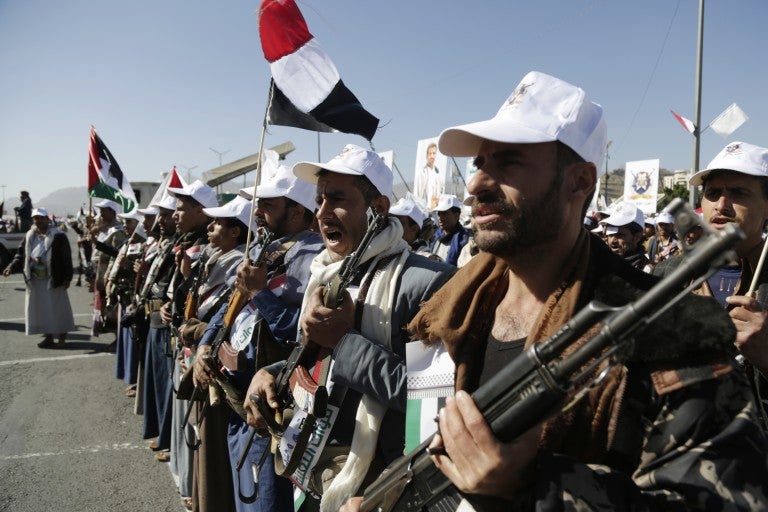
The Iranian regime’s endgame is to eliminate the Jewish state, as demonstrated through repeated, open calls for the annihilation of Israel. Israel has faced indirect Iranian attacks for decades through its terror proxies such as Hezbollah in Lebanon, Hamas and Palestinian Islamic Jihad from Gaza and the West Bank, and more recently, the Houthis in Yemen.
In 2024, Iran launched two direct large-scale attacks on Israel, marking a dangerous escalation in its longstanding campaign of terror. In April 2024, Iran fired around 300 drones and missiles at Israel from multiple fronts, with the vast majority intercepted, though some caused minor damage and injuries. In October 2024, Iran struck again with about 200 ballistic missiles in retaliation for the killing of senior Hezbollah and IRGC leaders; while most were intercepted, several hit military sites and caused casualties. These unprecedented direct attacks, alongside Iran’s continued support for terror proxies, prompted Israel’s preemptive strike to defend its citizens and deter further aggression.