Hamas, Hezbollah, Houthis, Iran - What you need to know

A Region at Risk: Arab Perspectives on Iran’s Escalation and the Path Forward - AJC Advocacy Anywhere
Nearly one month after coordinated U.S. and Israeli strikes in Iran, the regime has expanded the battlefield—targeting civilian, military, and energy infrastructure across the Gulf and beyond. Watch AJC's timely conversation with leading voices.
Iran’s Attacks Expose the IRGC Threat Europe Can No Longer Ignore
There should have been no surprise at Iran’s growing willingness to use its missile and drone arsenal to go after these targets directly. In April and October 2024, the regime made history when, for the first time, it directly attacked Israel. But, as is always the case, when Israel is the target, all else is context, easily dismissed or disregarded.
Tough Questions About the Iran War — Answered
For decades, the Iranian regime has destabilized the Middle East, targeting Americans, Israelis, Arabs, and even its own people—while backing terror proxies, advancing a nuclear program in defiance of international commitments, and fueling a global network of terrorism. Now, open conflict has forced urgent questions to the forefront. Find answers to your questions here.
What You Need to Know About Hezbollah: The Anti-Israel Terror Group With More Firepower Than Most NATO Militaries
Hezbollah’s arsenal of weapons poses a direct threat to Israeli cities, strategic sites, and civilian population centers and could be activated by the Iran-backed terror group at any time.
Iranian Regime’s War on America: Four Decades of Targeting U.S. Forces and Citizens
Since the 1979 Islamic Revolution, Iran has waged a decades-long campaign of violence against the United States, using terror proxies like Hezbollah and the Popular Mobilization Forces to target U.S. troops, diplomats, and civilians across the Middle East and beyond. This ongoing threat includes deadly attacks on U.S. bases in Iraq, Syria, and Jordan, as well as missile strikes like the June 23, 2025, assault on Al Udeid Air Base in Qatar, in retaliation for U.S. and Israeli strikes on Iran’s nuclear sites. Iran’s continued use of asymmetric warfare and support for regional proxies underscores its persistent goal to expel the U.S. from the region and advance its nuclear and missile programs.

Understanding the Latest Joint U.S.-Israel Operation in Iran - AJC Advocacy Anywhere
Beginning on Saturday, February 28, 2026, U.S. and Israeli forces have carried out significant strikes in Iran. As Iran has already begun retaliating and threatens further action, next steps and implications for the region and beyond are far-reaching.
Guidance for K-12 Schools on Teaching and Discussing the U.S. and Israeli Military Operations Against the Iranian Regime
American Jewish Committee (AJC), the global advocacy organization for the Jewish people, is offering this guidance to K-12 school administrators on teaching or holding classroom discussions about the U.S. and Israeli military operations against the Iranian regime. This guidance provides factual background and essential questions to support pedagogically sound instruction, along with recommendations to ensure that discussions are conducted with sensitivity – protecting all students and guarding against discrimination, antisemitism, and intergroup suspicion at a moment of heightened national tension and polarization.
The Iran Strikes, Explained: How We Got Here and What It Means
The United States and Israel launched coordinated military operations against the Iranian regime on February 28, 2026. The action, focused on the regime's nuclear facilities, military infrastructure, and leadership, followed a conclusion reached in Washington and Jerusalem that diplomacy had been exhausted, and that a nuclear-armed Iran posed an unacceptable security threat to America, Israel and America’s Arab allies, and the world. Here is what you need to know.
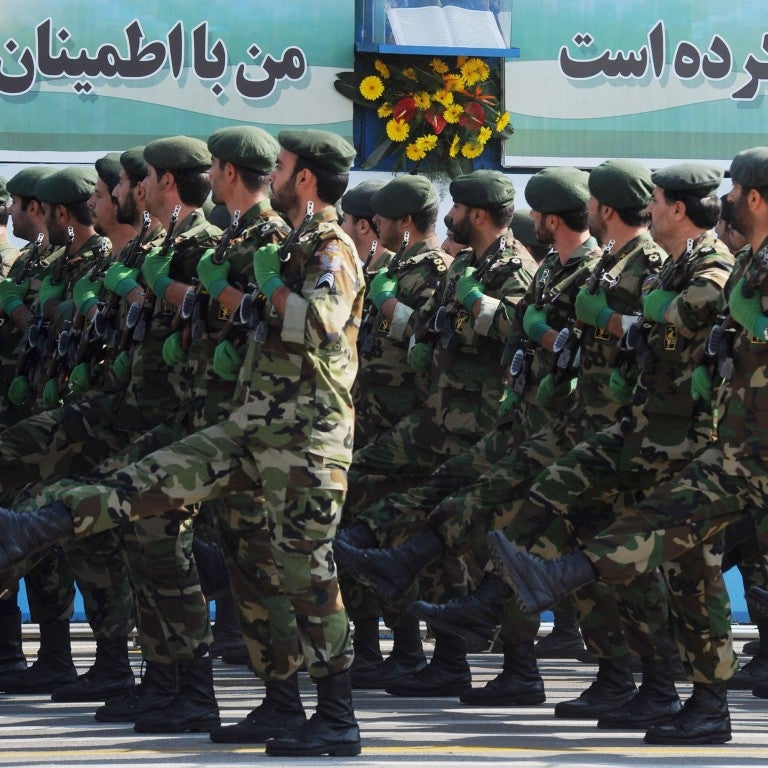
What is Iran’s Islamic Revolutionary Guard Corps and Why is it Designated a Terror Group by the US, EU?
On April 1, an alleged Israeli airstrike near Iran's embassy in Damascus, Syria, reportedly killed seven members of Iran's Islamic Revolutionary Guard Corps (IRGC), a U.S.-designated terror organization. Among those killed was a top IRGC commander, Mohammad Reza Zahedi.
5 Things to Know About Trump’s Board of Peace
President Trump’s new Board of Peace is a multinational body launched to oversee the Israel-Hamas ceasefire, Gaza’s postwar reconstruction and governance, and Israel’s security needs, but has since expanded into a proposed permanent global peace organization with more than 25 participating countries and a broader mandate beyond Gaza.
Explained: What to Know About the Protests in Iran
The Iranian regime is facing its most intense pressure in years as anti-government protests enter a third week, the death toll climbs into the hundreds or possibly thousands, and Iranian state media has aired rare footage showing dozens of bodies at a Tehran-area morgue.
Meet the American Hostages Who Were Held Captive By Hamas After October 7
These are the eight American hostages who were in Hamas captivity. Whether raised in Israel or spending a gap year before college, their lives were violently interrupted when thousands of Hamas terrorists crossed the Gaza border on October 7. Each story is a reminder of lives torn apart, families waiting, and a nation’s enduring hope.
AJC Welcomes Long-Overdue Return of the Surviving Hostages Released from Gaza
After 738 days, we are overjoyed watching the reunions of the twenty surviving hostages with their loved ones, and our hearts are with the families of the deceased hostages who await their return.
4 Reasons Why Unilateral Recognition of a Palestinian State Won’t Bring Peace — and 4 Things That Will
As France, Spain, the U.K., Canada, and Australia move toward recognizing Palestinian statehood, Israel remains at war with Hamas after the October 7 massacre. Premature recognition may seem like a bold diplomatic step toward a two-state solution, but it risks rewarding terrorism, destabilizing the region, and delaying genuine peace. This explainer outlines four key reasons recognition now fails—and four actions that can actually move negotiations forward. First, dismantle Hamas’s military and political power so violence is not legitimized. Second, confront the divided Palestinian governance structure by demanding institutional reform, an end to corruption, and enforceable security guarantees. Third, uphold the Oslo framework and return to direct Israeli-Palestinian talks that alone can resolve borders and security. Finally, replace symbolic gestures with regional cooperation, building on the Abraham Accords to create real economic and security incentives. Sustainable peace requires accountability, unified governance, and security for both peoples—not headlines without substance.
AJC Statement on the Israeli Security Cabinet’s Approval of a Military Takeover of Gaza City
Bring Hostage Evyatar David Back Home to Israel
Ilay David shares the gut-wrenching moments leading up to his brother's capture by Hamas terrorists on October 7.
AJC Full-Page Ad in The New York Times about Israeli hostage Evyatar David
Under the words “Kidnapped. Starved.” two side-by-side pictures show how Evyatar’s appearance has changed and how much weight he has lost.  
5 Reasons Why the Events in Gaza Are Not “Genocide”
Here are five reasons why the use of the term genocide -- which has come up Macklemore’s "Hinds Hall" song -- in Israel's self-defense campaign is inaccurate, misleading, and dangerous.
AJC CEO Urges European Nations to Activate Snapback Sanctions Against Iranian Regime
American Jewish Committee (AJC) CEO Ted Deutch said European nations have the “legal authority” and “moral responsibility” to trigger snapback sanctions against the Iranian regime for its pursuit of nuclear capabilities in defiance of its obligations under international agreements.