April 13, 2026
This piece was originally published in Jewish News (UK).
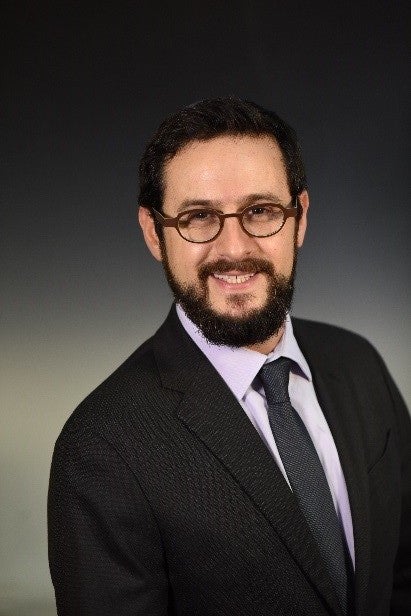
By Ari Gordon and Omar Lamghibchi
As Jews around the world observe Yom HaShoah—the day in the Jewish calendar commemorating the Holocaust—many will discern echoes of the past in the present. A torrent of anti-Jewish sentiment has led to attacks across Europe, the United States, and elsewhere as we witness the all too familiar re-emergence of ideologies that cast “the Jew” as the cause of global challenges. Meanwhile, ongoing wars across the Middle East flood our media with images of destruction, as civilians experience fear, displacement, and loss. It is precisely in such a climate of heightened tensions that historical memory becomes both more fragile and more necessary.
Anxiety that the tragedies of history may repeat themselves is understandable. However, our recent experience tells a different story: a Muslim-Jewish partnership channelling lessons of the past to build a hopeful future. Such partnerships, though still too rare, demonstrate that dialogue is not only possible but essential.
Our friendship is a new one, built in Morocco at a Regional Educators Conference hosted by the Association Mimouna, co-organized with AJC’s Centre for a New Middle East and the American Sephardi Federation, along with other Moroccan and American groups. The program brought together educators and activists from the Middle East, North Africa, and beyond to explore how Holocaust memory and preserving the heritage of religious minorities can contribute to anti-hate education across the Arab and Muslim worlds.
First, we must learn to share the narrative. For Ari, an Orthodox Jew from New York and grandchild of Holocaust survivors, the memory of that tragedy is profoundly personal. Omar, a Muslim from Morocco, has studied the Holocaust, the hateful anti-Jewish ideology of the Nazis, and visited concentration camps. We both understand that preserving the lessons of “Never Again” is the responsibility of all people. While we honour the Holocaust as a story of particular importance to Jews, we must also ensure it remains a universal call to remembrance—one that invites people everywhere to learn and find meaning within their own histories and cultures.
Second, preserving memory is about life. Morocco, a fitting host for last month’s conference, offers a powerful model in preserving physical Jewish heritage sites, such as Bayt Dakira, a synagogue-turned-museum, where our gathering was held. But Omar encouraged us to also consider “intangible heritage,” those parts of Jewish culture that the people themselves carry: the holiday foods and tunes; the life cycle customs; dress, language, and everyday practice. To do so requires preserving the lived experiences of the people and their stories, whether Holocaust memory or the lost Jewish cultures of the Middle East.
Finally, positive stories invite new audiences. It is no secret that the Holocaust remains mostly unstudied in the Arab world. For many, it is considered a European epoch and irrelevant to the Middle East. For others, the Holocaust is seen purely as a political tool used to support the Israeli government and military actions. Too many either choose to deny the magnitude of the tragedy or to place Jews in the role of “new Nazis.”
However, when we elevate the stories of Arab and Muslim heroes as an inroad, we can open hearts and minds. All Moroccans can honour King Mohammed V’s rejection of anti-Jewish laws during the Vichy occupation, famously asserting, “There are no Jews in Morocco. Only Moroccan subjects.” Likewise, we can teach the courageous actions of Muslim communities like the Grand Mosque of Paris and its Rector, Si Beghrabit, who hid Jews among Muslim families, issued life-saving Muslim identity papers to Jews, and facilitated Jewish escape from deportation through the mosque’s tunnel systems.
Episodes like these can create pride points for young Arabs and Muslims and serve as inspiration for both Jews and Muslims to take a stand – together – against unchecked hate. We cannot and should not ignore the darker parts of this history, whereby Nazi propaganda found audiences in Arabic and Persian, but if the only entry points to Holocaust education are negative, few will cross the threshold.
With all that said, we are not naïve to the serious challenges in Muslim-Jewish relations today. Years of war leave fertile soil for extremists of all communities to sow seeds of hate. However, the most effective antidote to any radical ideology is an alternative vision for the future and a coalition willing to fight for it. When some assert that violence and demonisation are the only way forward, we must demonstrate the power of understanding and partnership. When they weaponise history to divide, we must push back with the truth.
As the most recent episode of war began, conference organisers naturally considered postponing our program; would participants be able to travel safely from their home countries, some of which were under active attack? Beyond physical safety, would the necessary psychological safety exist to explore such sensitive subjects productively?
The decision to move forward was bolstered by a shared ideal that the path towards peace for all peoples of the region—Muslim, Jewish, Christian, and others—lies in engagement and dialogue between them. Even when disagreements arose, this commitment allowed us to build and strengthen new and productive friendships across lines of nationality and faith.
To study the Holocaust is to cultivate empathy for human suffering and to see beyond the demonizing labels of whole religious, ethnic, and national identities. It is to recognize that there is a day after war and that the time to prepare for that day is now. It is not easy, but it is only by doing this work together that we can hope to build a future that preserves the lessons of “Never Again.”
Ari Gordon is Director of Muslim-Jewish Relations for American Jewish Committee and Omar Lamghibchi is Vice Dean and Chair of History Department at Hassan II University