October 28, 2025
The following column appeared in The Jewish Chronicle, a London-based publication.
If you’ve never heard of Nostra Aetate, then you have something in common with most Jews.
But it’s definitely worth a read. Although it’s just 1,174 words in the original Latin, it speaks volumes about how far relations between Jews and Catholics have come, though we are also aware of how far they have to go.
Nostra Aetate, released 60 years ago, on October 28, 1965, said for the first time, on behalf of the Roman Catholic Church, that Jews were never collectively responsible for the death of Jesus. Until then, Jews had been portrayed as Christ-killers, and that tenet stoked much of the antisemitism we suffered for two millennia.
Granted, one proclamation cannot stop Jew hate, but Nostra Aetate was a tectonic shift in thinking and laid the groundwork for a real improvement in Jewish-Catholic relations.
Change does not come easily or rapidly at the Vatican. For the bishops under papal leadership to even get to this point in 1965 was nothing short of remarkable. A miracle even.
By stating that Jews are not to be “presented as rejected or accursed by God,” the Church made clear – in no uncertain terms – that antisemitism is unacceptable. It also reminded Catholics that Christianity’s roots lie in Judaism and that Jesus was born, raised, and died as a Jew.
Of course, Nostra Aetate by itself could not erase centuries of anti-Jewish Catholic teaching that had contributed to hate and violence directed at Jews.
But its legacy as a game changer is indisputable. For Catholics, it finally lifted the burden of defining religious identity in opposition to the other, by rejecting Christian belligerence towards Jews and Judaism.
To its credit, the Catholic Church ensured Nostra Aetate was much more than some proclamation released, only to be consigned to and forgotten in the Vatican archives. Rather, the Church’s actions ensured that it was a paradigm shift in its thinking, one that is still evolving six decades later, as new issues arise.
Although there were already Catholic-Jewish tensions very early post-October 7, 2023, they became more severe during Pope Francis’s waning months following Hamas’ brutal massacre of 1,200 people in southern Israel, especially when he suggested that accusations against Israel regarding genocide should be investigated.
There were also those in the Jewish community who were deeply concerned that Francis’ unique and critical megaphone might endanger them.
There is less daylight than some might imagine between Francis and his successor, Pope Leo XIV, on the substance of these issues, but there is definitely a new tone.
On the day of his election, Leo wrote to me and several other Jewish leaders and pledged to strengthen the Church’s dialogue with the Jewish people in the spirit of Nostra Aetate. That he reached out to us even before his papacy had formally been inaugurated was a welcome surprise.
I was glad to be included in his first meeting with Jewish and other religious leaders on the day after his inauguration at the Vatican, during which he said to the Jewish people: “Even in these difficult times, marked by conflicts and misunderstandings, it is necessary to continue the momentum of this precious dialogue of ours.”
The Catholic Church and Jewish leadership will not always see eye to eye in interpreting the unfolding events in the Holy Land. Catholic-Jewish disagreements were manifest in some of the Vatican statements on the second anniversary of October 7, which were critical of Israel.
These disparities require more conversations, not fewer, just as was needed in the creation and reception of Nostra Aetate.
Courage was needed for Catholics to reflect upon Christianity’s horrific past regarding the Jewish people and commit to a better journey of reconciliation. But it also required the Jewish establishment, then just 20 years removed from the Shoah, to overcome understandable suspicion and grasp the Catholic hand that was extended to them.
We watched Popes John Paul II, Benedict XVI, and Francis start new traditions that were unthinkable and unprecedented.
They all visited synagogues and, subsequent to the establishment of diplomatic relations between Israel and the Holy See in the 1990s and the Vatican recognizing the Jewish state, all three conducted state visits to Israel, where they were seen at the Kotel and Yad Vashem.
All three also visited and prayed at Auschwitz, where humanity reached its lowest depths. I expect Pope Leo XIV to also partake of these grand gestures, although I imagine he will wait until we are truly in the post-Israel-Hamas war period, a time which may have finally and mercifully arrived.
Yet Pope Leo’s tone gives me hope. We will disagree, I suspect, on some key matters, but the disagreements, I trust, will be conducted in a productive and loving way.
It’s incumbent upon both Jewish and Catholic leaders to ensure this dialogue can continue to take place so our relations can progress. I pray that Christians, Muslims, and Jews, indeed the leaders of all faiths enumerated in Nostra Aetate and beyond, can work together in restoring a path toward peace, shalom, salaam in the Middle East.
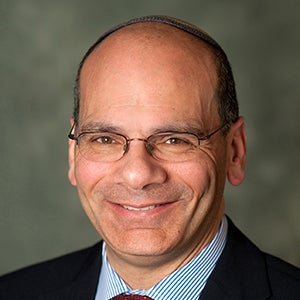
Rabbi Noam Marans is Director of Interreligious Affairs at American Jewish Committee.