April 17, 2026
This column appeared in E-Jewish Philanthropy.
Four in 10 Jewish college students have experienced antisemitism during their time on campus.
That troubling number was revealed in American Jewish Committee’s State of Antisemitism in America 2025 Report, conducted in partnership with Hillel International. Of those students, 68% have avoided expressing their views about Israel on campus. For them, self-censorship is a necessity rather than a choice.
Here are five lessons I’m carrying forward.
1) Resilience is not the absence of pain. It’s what you build while you’re in it.
The most resilient student leaders I’ve met are not the ones who weren’t hurt.
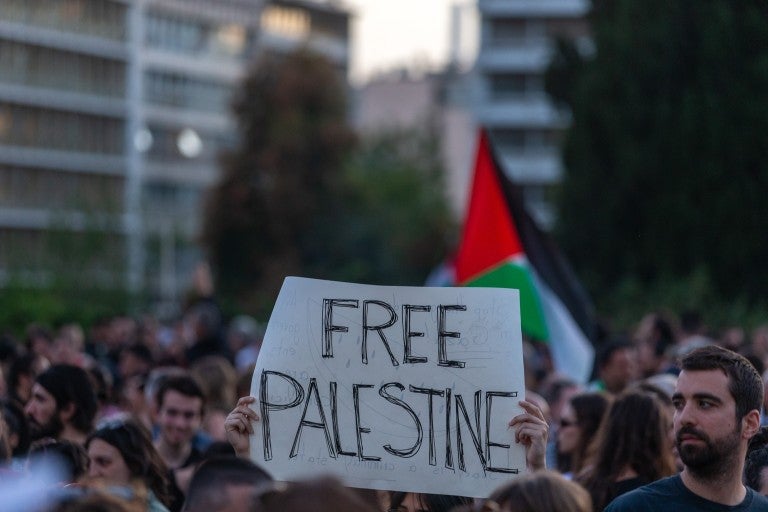
Among students who experienced antisemitism, AJC’s data shows that 60% avoided wearing or displaying things that would identify them as Jewish. That is not a statistic about protest culture. That is students hiding who they are.
What made the difference between students who retreated and students who showed up was about infrastructure: community, identity, and a sense of self built before the crisis arrived.
Resilience is a product of investment, not personality. When we build Jewish identity before crisis hits, we develop students who can withstand it. When we wait for the crisis to start, we are already behind.
2) Coalitions aren’t built in a crisis. They’re activated in a crisis.
You cannot cold-call a coalition.
The students who were most effective at responding to campus antisemitism were not the ones looking for allies after Oct. 7, 2023. They were the ones who had already built relationships with interfaith communities, minority student organizations, and peers who shared a commitment to a campus that protects all its students.
Shared values, honestly explored, create partnerships that hold even when specific positions differ. That is slower. It is harder. It is the only thing that actually works.
3) Institutions respond to documentation, pressure and persistence, in that order.
The AJC report found that 67% of students who experienced antisemitism did not report it.
The students who achieved real institutional change didn’t get there by asking nicely once. They documented everything, escalated when internal channels failed, and didn’t stop until the pattern was impossible to ignore.
Students deserve to know how systems actually work, not how we wish they did.
4) Jewish pride and nuance are not at odds — they go hand in hand.
This generation has faced a relentless false choice: be proudly Jewish or be thoughtful and complex, as if those were opposites.
The students who showed up most effectively rejected that framing, not by avoiding hard questions, but by being sufficiently grounded to engage without losing themselves.
According to the AJC report, 69% of Jewish college students say that caring about Israel is important to what being Jewish means to them. That is a deep, personal connection that deserves to be honored, not treated as a liability.
Jewish pride is not a wall. When built correctly, it is what makes genuine engagement with complexity possible. Students who knew who they were before the pressure came were the ones who could still tell you who they were after.
5) Jewish students don’t see borders. We should stop acting as though we do.
One of the most striking things about working in AJC’s global campus network is watching Jewish students across continents find each other. Students in disparate places like Budapest, Buenos Aires, Melbourne or Ann Arbor can all have versions of the same conversation.
For example, one student in Europe might have spent a semester documenting bias incidents and finally moved her university to act. Meanwhile, another student in South America mobilized for that same fight six months later and contacted the first student for advice. Not a conference. Not a panel, but a direct transfer of hard-won knowledge across borders.
That is what global solidarity looks like when it works. This generation is already doing it informally. Our job is to build the infrastructure that makes it intentional.
The Jewish communal world has spent a lot of time since Oct. 7, 2023, asking how we respond to antisemitism. That is the right question. But underneath it is a harder one: What did we build before the crisis came, and was it enough?
For too many students, the answer was no. We owe those who showed up more than gratitude.
We owe them a system that was ready before they needed it. We are not there yet. That is what this generation taught me. And it is the only lesson that matters if we intend to do better next time.
Moshe Lencer is AJC Director of Campus Affairs.