July 20, 2026
The United States and Israel launched coordinated military operations against the Iranian regime on February 28, 2026. The campaign, focused on Iran's nuclear facilities, military infrastructure, and leadership, followed a conclusion reached in Washington and Jerusalem that diplomacy had been exhausted and that a nuclear-armed Iran posed an unacceptable threat to the United States, Israel, America's Arab partners, and global security.
After 40 days of sustained combat, a ceasefire took effect on April 8, 2026, raising hopes that the conflict had entered a new diplomatic phase. In June, the United States and Iran announced a reported Memorandum of Understanding (MOU) outlining a 60-day framework for negotiations over Iran's nuclear program and regional security. However, renewed attacks by Iran, including against commercial shipping in the Strait of Hormuz, have since derailed those efforts. The United States has resumed military strikes, President Trump has announced the reimposition of a naval blockade on Iran, and hostilities have once again intensified. Here is what you need to know.
Key Takeaways
- The U.S. and Israel have resumed military operations against Iran after the collapse of a reported June 2026 Memorandum of Understanding (MOU) intended to pause fighting and restart nuclear negotiations.
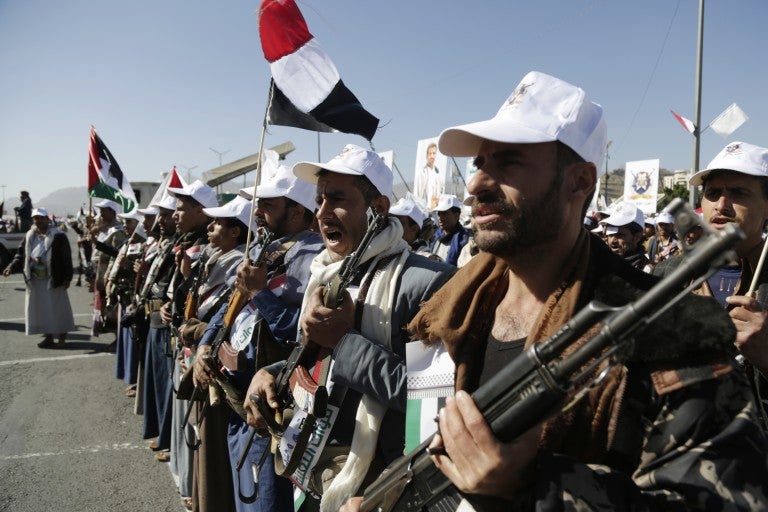
- Iran continues advancing its nuclear program while backing terrorist groups including Hamas, Hezbollah, the Houthis, and Iraqi militias that threaten Israel, the United States, and America's regional partners.
- The Strait of Hormuz remains a critical global chokepoint, with renewed Iranian attacks on commercial shipping raising concerns about energy prices and global trade.
- Although U.S. officials say diplomacy remains possible, both Washington and Tehran have returned to military pressure as negotiations have stalled.
Latest Developments
Escalating U.S.-Iran Conflict
Two U.S. service members were killed, and another remains missing after the Iranian regime struck an American base in Jordan over the weekend of July 18-19. Separately, a third U.S. service member died in Iraq following a drone-related attack. In response, President Trump ordered retaliatory airstrikes against Iranian regime targets, and the U.S. is now bolstering its fighter jet presence in the region as tensions rise. Meanwhile, at Iran’s direction, Yemen’s Houthis announced a maritime blockade targeting Saudi shipping through the strategic waterway connecting the Red Sea and Gulf of Aden that could reduce global energy supply by 7%, adding to concerns that the conflict could further disrupt global trade and energy security. While Secretary of State Rubio and an Iranian official both signaled openness to talks, Iran’s president called it a “full-scale war.”
Go Deeper | Anne Dreazen, Vice President of AJC’s Center for a New Middle East, argues in The Times of Israel that despite both sides seemingly trying to manage escalation strategically, the rapid expansion of U.S.-Iran strikes into infrastructure and personnel targets makes uncontrolled escalation far more likely than it appeared just days ago. Read Dreazen’s analysis.
New Hamas Leader Named
The Iran-backed terror group announced Monday, July 20, that Khalil al-Hayya will serve as its political leader. Hamas’ Qatar-based chief negotiator during the Israel-Hamas War, Hayya has publicly defended the October 7 terrorist attack, maintains close ties to Iran, and remains a leading advocate of Hamas’ armed campaign against Israel. He survived a reported Israeli assassination attempt in Qatar last year and has emerged as one of the group’s most influential leaders following Israel’s elimination of much of Hamas’ senior leadership. He is the first person appointed to the role since Yahya Sinwar was killed by Israeli forces in October 2024.
IDF Begins Lebanon Withdrawal
The IDF is set to begin its first withdrawal from a “pilot zone” in southern Lebanon Monday, handing over the area to the Lebanese army under a U.S.-backed agreement between Jerusalem and Beirut. The withdrawal is happening in two areas spread across three villages and comes as Lebanese President Joseph Aoun is set to meet with President Trump in Washington, D.C., on Tuesday—the first visit by a Lebanese leader to the U.S. in 17 years.
Why is the Strait of Hormuz so important?
The Strait of Hormuz is one of the world's most strategically important waterways. Connecting the Persian Gulf to the Gulf of Oman and the Arabian Sea, it serves as the primary export route for oil and liquefied natural gas produced by Gulf countries, including Saudi Arabia, the United Arab Emirates, Kuwait, Qatar, Iraq, and Iran.
Roughly one-fifth of the world's oil supply passes through the narrow waterway each day, making any disruption a significant concern for the global economy.
Iran has repeatedly threatened to close the Strait during periods of heightened tensions. While the Iranian regime has the capability to disrupt shipping through mines, missiles, drones, naval forces, and attacks on commercial vessels, permanently closing the Strait would be extremely difficult due to the presence of the U.S. Navy and allied maritime forces.
Even limited disruptions, however, can increase shipping costs, drive up global energy prices, delay commercial trade, and heighten the risk of a broader regional conflict.
Following Iran's recent attacks on commercial shipping, President Trump announced that the United States would reimpose a naval blockade on Iran and require a 20% reimbursement on cargo transiting the Strait of Hormuz.
What is the status of Iran's nuclear program?
For years, Iran has steadily expanded its nuclear program far beyond the limits established under the 2015 Joint Comprehensive Plan of Action (JCPOA).
According to the International Atomic Energy Agency (IAEA), Iran has accumulated significant quantities of uranium enriched to 60% purity—far above civilian requirements and just below the roughly 90% enrichment generally associated with weapons-grade material. It has also expanded its advanced centrifuge program while limiting international inspectors' ability to monitor key aspects of its nuclear activities.
Israel has long argued that these developments, combined with Iran's missile program and repeated calls for Israel's destruction, demonstrate that Tehran seeks the capability to quickly produce nuclear weapons if it chooses to do so.
The U.S. and Israeli military campaign has targeted many of Iran's most important nuclear facilities, but experts continue to debate how much of Iran's nuclear knowledge, stockpile, and industrial capacity remain intact.
What was the U.S.-Iran Memorandum of Understanding (MOU)?
Following months of fighting, the United States and Iran announced a reported Memorandum of Understanding (MOU) in June 2026 establishing a 60-day framework for negotiations over Iran's nuclear program, sanctions relief, and regional security.
According to reports, the agreement included commitments by Iran not to expand its nuclear activities during the negotiation period, provisions related to sanctions relief and frozen Iranian assets, protections for commercial shipping through the Strait of Hormuz, and broader discussions aimed at reducing regional tensions.
Supporters argued that the agreement offered an opportunity to prevent further escalation while creating space for diplomacy. Critics—including AJC—noted that the reported framework appeared to grant Iran significant economic concessions before resolving fundamental questions surrounding uranium enrichment, ballistic missiles, support for terrorist proxies, and long-term verification.
Why has the MOU begun to unravel?
The agreement quickly came under strain as disputes emerged over implementation.
Differences over sanctions relief, verification of Iran's nuclear activities, ballistic missile development, proxy attacks, and freedom of navigation through the Strait of Hormuz contributed to growing tensions between Washington and Tehran.
Following renewed attacks on commercial shipping and additional Iranian military actions, President Trump formally notified Congress that hostilities had resumed. The United States subsequently launched another round of strikes against Iranian targets, while announcing the reimposition of a naval blockade after Tehran claimed it had closed the Strait of Hormuz.
Although diplomatic channels have not been completely abandoned, the MOU is widely viewed as having effectively broken down, with both sides once again relying primarily on military pressure while leaving open the possibility of renewed negotiations in the future.
What happened?
U.S. President Donald Trump confirmed that the United States launched strikes against the Iranian regime, saying “the United States military began major combat operations in Iran” to “defend the American people by eliminating imminent threats from the Iranian regime,” and reiterating that Tehran “can never have a nuclear weapon.”
The U.S. operation, Epic Fury, was carried out alongside Israel’s campaign Roaring Lion, with Prime Minister Benjamin Netanyahu stating Israel acted to remove “the existential threat posed by the terrorist regime in Iran.”
Over the course of the 40-day campaign:
- Israel conducted more than 10,800 strikes on over 4,000 targets
- The Israeli Air Force dropped over 18,000 bombs in more than 1,000 waves
- The United States carried out approximately 13,000 strikes on Iranian military targets
Targets included nuclear facilities, ballistic missile infrastructure, air defense systems, military production sites, and senior leadership. Iranian media reported explosions in Tehran and other key strategic locations tied to defense and intelligence networks.
How Iran Conducted Its Missile and Drone Campaign During the War
Iran launched sustained waves of ballistic missiles and drones targeting Israeli population centers as well as U.S. military positions across the region.
Over the course of the war:
- Approximately 650 ballistic missiles were fired at Israel
- Many missiles carried cluster munitions, increasing civilian risk
- 20 Israeli civilians and foreign nationals were killed, along with 4 Palestinians in the West Bank
- More than 7,000 Israelis were injured and over 5,500 displaced
At the height of the initial barrage, roughly 80 missiles were fired on the first day, followed by about 60 the next day, and 30 on the third. In the weeks that followed, attacks declined to roughly 10–20 missiles per day as Iran’s capabilities were degraded.
Iran also expanded attacks across the Gulf, targeting or impacting Bahrain, Kuwait, Oman, Qatar, Saudi Arabia, and the United Arab Emirates—including strikes on energy infrastructure, civilian areas, and locations near U.S. military installations.
As of mid-April, amid a fragile ceasefire, Iran’s ability to sustain large-scale attacks appears significantly reduced. Israeli operations reportedly destroyed or disabled roughly 60% of Iran’s ballistic missile launchers and severely degraded its missile production capacity, limiting its ability to replenish stockpiles in the near term.
Did Iran Target U.S. Forces?
Yes. Iranian strikes directly targeted U.S.-linked facilities, including sites associated with the U.S. Fifth Fleet in Bahrain and bases in Qatar, Kuwait, and Iraq.
These attacks resulted in American casualties:
- At least 13 U.S. service members killed
- Approximately 140 wounded
This underscores that U.S. forces were not only at risk but were actively targeted as part of Iran’s escalation.
Did Iran Target Global Energy and Shipping?
Iran has increasingly targeted energy and maritime infrastructure across the Gulf.
Strikes hit oil facilities in the UAE, targeted Saudi Arabia’s Shaybah oil field, and damaged Bahrain’s refinery and desalination infrastructure. At the same time, Iranian actions near the Strait of Hormuz—including threats to shipping—reduced tanker traffic and heightened global concerns about energy supply disruptions.
Which Iranian Regime Leaders Have Been Killed?
The joint U.S.–Israel operation has targeted senior Iranian officials responsible for overseeing Iran’s nuclear program, ballistic missile development, support for terrorist proxies, and the regime’s repression of domestic protests.
Iranian state media, along with U.S. and Israeli officials, confirmed that Ali Khamenei — Iran’s Supreme Leader since 1989 — was killed in strikes on Tehran. Satellite imagery shows extensive destruction at his compound following the attack, which Israeli officials said targeted a meeting of senior Iranian security leaders.
According to the Israel Defense Forces, the opening phase of the operation included coordinated strikes on several locations in Tehran where top military and regime officials had gathered.
Among the senior figures reported killed are:
- Abdolrahim Mousavi, Iran’s army chief of staff
- Aziz Nasirzadeh, Iran’s defense minister
- Mohammad Pakpour, head of Iran’s elite military force responsible for regional proxy operations
- Ali Shamkhani, senior adviser to the Supreme Leader and former secretary of Iran’s Supreme National Security Council
- Mohammad Shirazi, head of the Supreme Leader’s military bureau
- Hossein Jabal Amelian, head of the Organization of Defensive Innovation and Research (SPND), linked to advanced weapons development
- Saleh Asadi, head of the intelligence directorate of the Khatam al-Anbiya emergency command
- Reza Mozaffari-Nia, former head of SPND and former deputy defense minister
In addition, on March 17, Israeli officials reported the elimination of two more senior regime figures:
- Ali Larijani, secretary of Iran’s Supreme National Security Council and longtime regime insider accused of overseeing crackdowns on anti-regime protests
- Gholamreza Soleimani, head of the Basij militia, Iran’s central internal repression force
Israeli officials said the strikes targeted a high-level security meeting involving figures responsible for directing Iran’s strategic military programs, including missile and drone operations, as well as the regime’s internal security apparatus.
Following the death of Ali Khamenei, Iranian authorities reportedly established a temporary leadership council — including Masoud Pezeshkian, Gholamhossein Mohseni Ejei, and Alireza Arafi — to oversee the transition. Iranian state media has since reported that Mojtaba Khamenei, the son of the late supreme leader and a longtime behind-the-scenes power broker, has been appointed as Iran’s new supreme leader by the Assembly of Experts. The transition marks the most significant leadership shift in the Islamic Republic since the Iranian Revolution.
Who Was Iran’s Supreme Leader Ayatollah Ali Khamenei, and Why Was He a Threat to the World?
Ali Khamenei, 86, has served as Iran’s Supreme Leader since 1989, succeeding the Islamic Republic's founder, Ruhollah Khomeini. As Supreme Leader, he held ultimate authority over Iran’s military, judiciary, and key political institutions while serving as the regime’s highest religious authority. A mid-ranking cleric without the senior religious credentials of his predecessor, Iran amended its constitution to allow Khamenei’s appointment.
Under Khamenei, Iran expanded its regional power through the backing of terrorist proxy groups, including Hezbollah, Hamas, and the Houthis. The United States and several Western governments designate Iran as the world’s leading state sponsor of terrorism, while Tehran has continued advancing its nuclear program and long-range missile capabilities.
At home, Khamenei’s rule was marked by harsh repression, especially of protest movements over the years, including the 2009 Green Protests, 2022 Women, Life, and Freedom Protests, and most recently the protests in January 2026. Authorities have repeatedly imposed internet shutdowns during nationwide protests, and human rights groups report that security forces have killed tens ofthousands of demonstrators during successive crackdowns.
Khamenei has long engaged in spreading antisemitism, including Holocaust denial. His hostility toward Israel has been explicit. He called the Jewish state a “cancerous tumor” and “rabid dog,” promoted conspiracy theories about “Zionist” influence in Western politics, and circulated messaging invoking the Nazi phrase “Final Solution” in reference to Israel. For decades, opposition to Israel and the United States had been central to his rule.
Who is Mojtaba Khamenei, Iran's New Supreme Leader?
Mojtaba Khamenei, 56, has been appointed the new supreme leader of the Iranian regime following the elimination of his father, Ali Khamenei, by U.S. and Israeli forces on February 28. In 2019, the United States imposed sanctions on Mojtaba Khamenei, noting that he had been “representing the supreme leader in an official capacity despite never being elected or appointed to a government position aside from work in the office of his father.” Despite 2019 U.S. sanctions, networks linked to Iran’s supreme leader allegedly funneled billions in oil revenue through Western banks to buy over £100 million ($138 million) in luxury property in London and Dubai—assets that are now controlled by Mojtaba. Mojtaba’s close ties to Iran’s Islamic Revolutionary Guard Corps (IRGC) and the regime’s hardline establishment suggest that Tehran is unlikely to moderate its regional posture in the near term.
Why is Iran blocking the Strait of Hormuz?
To pressure the world by threatening global energy supplies.
The Strait of Hormuz remains one of the most strategically important waterways in the world, with roughly one-fifth of global oil supply passing through this narrow corridor connecting the Gulf to the open ocean.
During the conflict, Iran signaled its willingness to disrupt shipping—through attacks, mining threats, and aggressive naval activity—in an effort to raise the global cost of confronting the regime. Iran’s new Supreme Leader, Mojtaba Khamenei, reinforced this strategy, framing the strait as a key point of leverage against Iran’s adversaries.
However, following the April 8 ceasefire, there are early indications that Iran has scaled back immediate threats to fully close the strait, as part of a broader effort to avoid further escalation and stabilize the situation. Commercial shipping traffic has begun to normalize, though it remains below typical levels, and international naval forces continue heightened patrols.
Despite this de-escalation, the underlying threat has not disappeared. Tehran has long used the possibility of disrupting the Strait of Hormuz as strategic leverage, and retains the capability to quickly escalate again if tensions rise.
Blocking or significantly disrupting the strait would still risk spiking global energy prices, disrupting trade, and placing pressure on the United States, Europe, and Gulf Arab states.
In other words, while the immediate risk has eased, Iran continues to hold the potential to turn a regional conflict into a global economic crisis.
What is the History of US-Iran Tensions?
Iran's Nuclear Ambitions
For decades, the Iranian regime has pursued nuclear weapons, long-range ballistic missiles, and a global network of terrorist proxies—including Hezbollah, Hamas, Iraqi militias, and the Houthis—openly threatening Israel, destabilizing the region, targeting the United States, and supporting Russia in its war against Ukraine through the supply of tens of thousands of suicide drones.
The 2015 Iran nuclear deal, known as the Joint Comprehensive Plan of Action (JCPOA), slowed parts of Iran's nuclear program but left its ballistic missile program and support for terrorist proxies largely untouched. After the United States withdrew from the agreement in 2018, Tehran steadily expanded its uranium enrichment, advanced centrifuge program, and missile capabilities.
Diplomacy Breaks Down
Diplomatic efforts to curb Iran's nuclear program collapsed in early 2025 when Supreme Leader Ali Khamenei rejected renewed negotiations as Iran enriched uranium to 60% purity and further restricted inspections by the International Atomic Energy Agency (IAEA). After the IAEA formally censured Tehran, the regime announced plans for another hardened enrichment facility, while agency reports concluded Iran was significantly closer to a nuclear weapon than previously believed.
President Trump repeatedly stated that he preferred a diplomatic solution but insisted that "Iran cannot have nuclear weapons," warning that military action remained an option if Tehran refused to verifiably dismantle its program. In June 2025, the United States again demanded that Iran abandon its nuclear weapons ambitions, but Tehran refused.
October 7 and Regional Escalation
Iran also played a central role in supporting Hamas before and after the October 7, 2023 terrorist attack on Israel—the deadliest day for the Jewish people since the Holocaust. Tehran subsequently launched its own direct missile and drone attacks against Israel in April and October 2024 while continuing to arm and finance Hezbollah, Hamas, the Houthis, and other proxy groups across the region.
Following the collapse of diplomacy, Israel launched Operation Rising Lion in June 2025, targeting key Iranian nuclear facilities. Days later, the United States joined the campaign with strikes against Fordow, Natanz, and Isfahan.
Mounting Pressure Inside Iran
At the same time, Iran faced growing instability at home. Economic collapse, a plunging currency, and widespread dissatisfaction fueled protests across all 31 provinces. Human rights organizations reported that security forces killed more than 6,000 demonstrators and arrested tens of thousands during a sweeping crackdown, highlighting mounting domestic pressure on the regime even as tensions with the West escalated.
From Diplomacy to War
Despite multiple rounds of indirect nuclear negotiations mediated by Oman and a significant U.S. military buildup across the Middle East, diplomacy ultimately failed to resolve the standoff. Washington and Jerusalem concluded that a nuclear-armed Iran posed an unacceptable threat to regional and global security, leading to the coordinated military campaign that began on February 28, 2026.
How Has Iran Threatened Jewish Communities Around the World?
Iran's threat extends far beyond the Middle East.
For decades, Iran and its terrorist proxies have been linked to attacks and plots targeting Jewish communities, Israeli diplomatic missions, and dissidents across multiple continents.
Among the most notorious attacks:
- The 1992 bombing of the Israeli Embassy in Buenos Aires, which killed 29 people.
- The 1994 bombing of the AMIA Jewish Community Center in Buenos Aires, which killed 85 people and injured more than 300—the deadliest antisemitic terrorist attack since the Holocaust until Hamas' October 7, 2023 massacre.
- Multiple alleged Iranian and Hezbollah plots targeting Jewish and Israeli sites in Europe, Asia, Africa, and Latin America.
These attacks reflect Iran's longstanding strategy of projecting power well beyond its borders through proxy organizations and covert operations.
Key AJC Resources on Iran’s Threats, Proxies, and Regional Influence
AJC has been tracking Iran's nuclear threat, domestic repression, and regional aggression for years. Key AJC resources for background:
Understanding the Latest Joint U.S.-Israel Operation in Iran - AJC Advocacy Anywhere
Watch American Jewish Committee's (AJC) urgent briefing with leading experts who will break down the evolving situation, assess the regional and geopolitical consequences, and provide critical insight into what to watch in the days and weeks ahead.
Analysis from AJC's Center for a New Middle East
Iran's Terror Network
- Iranian Regime’s War on America: Four Decades of Targeting U.S. Forces and Citizens
- What is Iran's IRGC?
- Hezbollah, Hamas, and More: Iran's Terror Network Around the Globe
- The Houthis, Explained
Protests and Human Rights
- Explained: What to Know About the Protests in Iran
- AJC Urges International Community to Protect Iranians
Sanctions and Diplomacy
June 2025 12-Day War