American Jewish Committee (AJC), the global advocacy organization for the Jewish people, is offering guidance to K-12 school administrators on how to best prepare for the anniversary of October 7 in school settings by proactively anticipating the needs of Jewish students, ensuring safeguards and resources are in place for them, and troubleshooting potential problems that may arise.
AJC’s Center for Education Advocacy recognizes that every school community is different and has distinctive needs. We are here to help you address them. Please contact us to discuss how we can assist.
Background
Wednesday, October 7, 2026 marks the date of the Hamas-perpetrated terror attacks in Israel, in which 1,200 people were brutally murdered, and 251 were taken into Gaza as hostages by Hamas terrorists. As of January 26, 2026, no Israeli hostages remained, marking the first time since 2014 that Hamas has held no Israeli captives in Gaza.
October 7 represents the deadliest terror incident in Israel’s history, in which not only Israeli Jews, but also Muslims, Christians, Hindus, Buddhists, Israeli Arabs, and people from over 40 countries, including 49 Americans, were targeted and killed.
For the worldwide Jewish community, October 7, 2023, also marks the most significant loss of Jewish lives in one day since the Holocaust, and remains a painful open wound that may still directly impact Jewish students, faculty, and their families.
Be Alert and Aware
Consider the impact of today’s environment on your Jewish students and faculty.
- The October 7 attacks occurred at the end of the 2023 Jewish fall holiday season on the joyous holiday of Simchat Torah. The fact that the anniversary occurs during a season of joy may deepen the emotional dissonance for Jewish staff, students, and families.
- Since October 7, 2023, Jews in the United States have faced a terrifying increase in violent and even deadly antisemitism. Synagogues and Jewish spaces now require heightened security, with armed guards becoming routine. For students attending High Holiday services, this police and security presence can be stressful and frightening.
- Many Jewish students have faced increasingly hostile rhetoric online and even among classmates and faculty in their schools because of their real or perceived connection to Israel and Zionism. Some of that rhetoric has included deeply problematic messaging about October 7 that denies or minimizes the October 7 attacks or dehumanizes Israeli victims of October 7 (e.g., “no innocent Israelis”; tearing down or vandalism of hostage posters; denial of sexual assault committed against Israelis). It has also included attempts to reframe the violence and terror of October 7 as justified resistance, decolonization, or liberation. Language that minimizes or denies the impact of October 7, vilifies Israel and Zionism, or engages in victim-blaming for the atrocities committed on October 7 will resonate painfully for many Jewish students, especially when it appears in the school spaces that are so central to their lives.
School Programs and Activities
Be prepared for activities or programs that may take place at your school, and anticipate the potential needs of your Jewish students and faculty:
- Inform relevant school staff, including principals, deans, and counselors, that Jewish students and faculty may require extra support on or around October 7. Plan ahead so staff are ready to support members of the school’s Jewish community that day.
- Provide Jewish students and faculty with time and space for reflection or commemoration, such as a "drop-in" space during lunch or affinity group time.
- Ensure that no essential or required school events (such as Back to School Night or college guidance programs) are scheduled for the night of October 7, when many Jewish community members may be attending memorial programs.
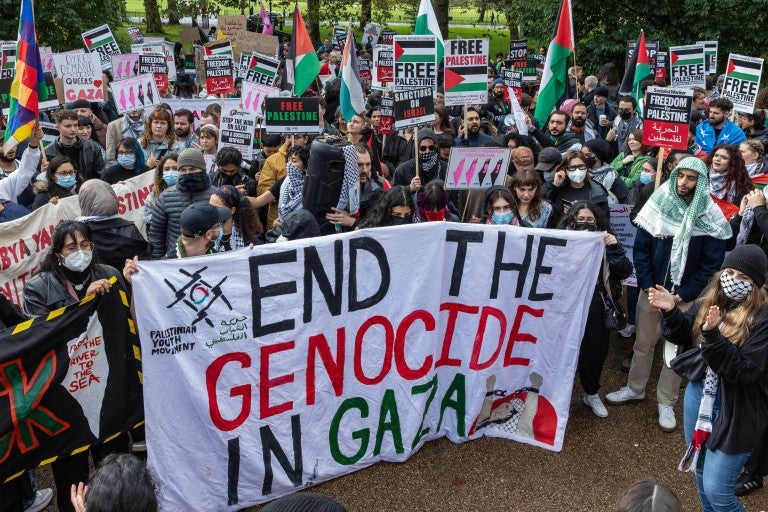
- Be aware that student walkouts or protests against Israel on October 7 may be extremely hurtful, frightening, and upsetting to many of your Jewish students and community members. Schools should work to minimize these impacts by imposing time, place, and manner restrictions on protest activity at school that comply with the law.
- Refer to CEA’s Guidance for K-12 School Administrators on Handling Student Protests and Walkouts for additional information.
- Proactively reach out to Jewish parent leaders. Recognize that Jewish parent affinity groups may want to create their own programming to memorialize October 7. If your school has such a group, consider offering after-school space and ensure appropriate school administrators are present at any such program.
- Avoid compelling students to speak about their identities or political views.
- Recognize that students may have personal connections to victims, survivors, or ongoing trauma.
- If your school invites guest speakers, ensure the programming aligns with educational objectives and that students are prepared in advance.
- Be attentive to the digital environment. Harassment and harmful rhetoric often spill over into school spaces through group chats, Instagram, TikTok, Discord, and other platforms connected to the school community. Administrators should monitor school-managed digital spaces. Be prepared to refer to your school’s policies and code of conduct for both faculty and students when online conduct affects the school community or targets Jewish students.
Communicate with Care
Schools have different policies on public communications in response to national or international events. If your school plans to address the anniversary of October 7, or if you will address your students or school community in any way about October 7, do so with sensitivity and purpose. Schools can affirm their commitment to fostering a diverse yet unified community by emphasizing shared identity, core values, and education's role in promoting critical thinking and curiosity.
- Avoid using contested or vague language that may unwittingly distort your messaging or dilute your support for Jewish students at this difficult time. Encourage faculty to rely on verified primary sources and established reporting when discussing October 7 or subsequent events.
- Avoid incorrectly referring to those killed in Israel on October 7 as victims of a war, military incursion, or occupation, and avoid using phrases such as "cycle of violence" in any reference to the day. These designations detract from the horror of the terrorist attacks that specifically targeted innocent civilians, including babies and the elderly, as well as non-Israelis and non-Jews. Similarly, messaging about October 7 should avoid comparative accounts of Palestinian deaths from the subsequent war, as these casualties deserve acknowledgment on their own terms and should be addressed separately from messaging about the October 7 terror attacks.
AJC’s Center for Education Advocacy is your partner in fostering a deeper understanding of the Jewish people, combating antisemitism, and helping build a school environment resilient against all forms of hate. We are here to help. Contact us.