June 30, 2026 — Abu Dhabi
This column appeared in Times of Israel.
Israel’s Abraham Accords partners in the Arabian Gulf – the United Arab Emirates and the Kingdom of Bahrain – have more than maintained the commitments their leaders made six years ago to recognize the Jewish state and advance Arab-Israeli peace. Even as the region has suffered the anguish and uncertainties of war, these leaders have looked beyond current conflicts to empower institutions that will help realize the full potential of the historic agreements reached in 2020, in the final months of the first Trump administration.
American Jewish Committee recently engaged with two such institutions – the latest steps in a decades-long process of forging constructive relationships across the Arab world to safeguard Jewish communities, deepen mutual understanding and respect, and open doors for political, economic, cultural, and strategic ties to Israel.
In Abu Dhabi, where AJC opened an office five years ago, we partnered with the Emirates Scholar Center for Research and Studies to play a central role in the Third International Dialogue of Civilizations and Tolerance Conference, with a focus on “the impact of new media and AI on family and community.”
From the main stage, we were given an opportunity to address a regional audience on the dangers of hate and denigration widely circulated on social media – and the impact of such insidious messages on Jews and other vulnerable minorities. We pointed to the AJC survey finding that an overwhelming majority of American Jews feel increasingly less safe than in the recent past, and cited acts of deadly violence against our community – as well as against Muslim communities – clearly motivated by unchecked, unfiltered lies on the Internet.
We repeated calls on governments and social media platforms to strengthen enforcement against the glorification of antisemitic attacks and pro-terror content, improve detection of coded and AI-generated antisemitism, prevent coordinated manipulation and bot activity, and increase transparency around content moderation and algorithmic amplification.
In another session of the Abu Dhabi conference, on the balance between free expression and respect for divergent beliefs, we joined Muslim, Christian, Hindu, and Baha’I participants in insisting that free expression cannot be divorced from responsibility, and that a hands-off approach to dehumanizing online behavior can be – and has been – lethal.
Having participated in each of the Emirates Scholar Center’s annual international conferences, and having benefited over the years from the UAE spirit of inclusiveness, AJC was privileged in the course of the three-day conference to sign a Memorandum of Understanding with the Emirates Scholar Center that will enable joint programming to support intercultural dialogue, counter extremism and hate, and expand a cohort of researchers, students, and working professionals focused on interreligious and education advocacy.
Days after the program in Abu Dhabi and a consultation with UAE Minister of Tolerance Sheikh Nahyan bin Mubarak Al Nahyan, AJC was received in Bahrain at the King Hamad Global Center for Coexistence and Tolerance, an institution established in 2018 that conducts interreligious dialogues, educational training, exchange programs, and research, all with the aim of pursuing the monarch’s vision that the island nation “will always remain a home of pluralism and a beacon of cultural harmony, religious coexistence, and humanism.”
In a country with a Muslim majority population split between Sunni and Shi’a adherents, a small indigenous Jewish community, and significant numbers of Hindus, Christians, and Buddhists, coexistence isn’t an appealing national objective – it’s a necessity for a functioning, diverse society.
That commitment to mutual understanding and peaceful coexistence also stands in stark contrast to the messages conveyed – through political statements, social media posts, and terrorist proxy support, and through wave after wave of missiles and drones these last three-plus months – directed at Bahrain by the Islamic Republic of Iran, a regime that regards the island as a lost territory and has repeatedly tried to induce insurrection among the Shi’a population.
On one side of the Arabian Gulf is a regime that tyrannizes its population, fears and prevents interreligious understanding, preaches hatred of open societies – and attacks and attempts to subvert its neighbors. On the other side of the Gulf, as AJC continues to discover, engage, and celebrate, are governments and civil society institutions with the opposite approach, committed to dialogue, unafraid to invest in, and takes risks for, peace.
However the current war with the radical regime in Iran concludes, and whether the reign of Iranian terror ends quickly or over time, it is those forward-looking nations that will shape the new Middle East. It is those forward-looking nations that deserve our full support.
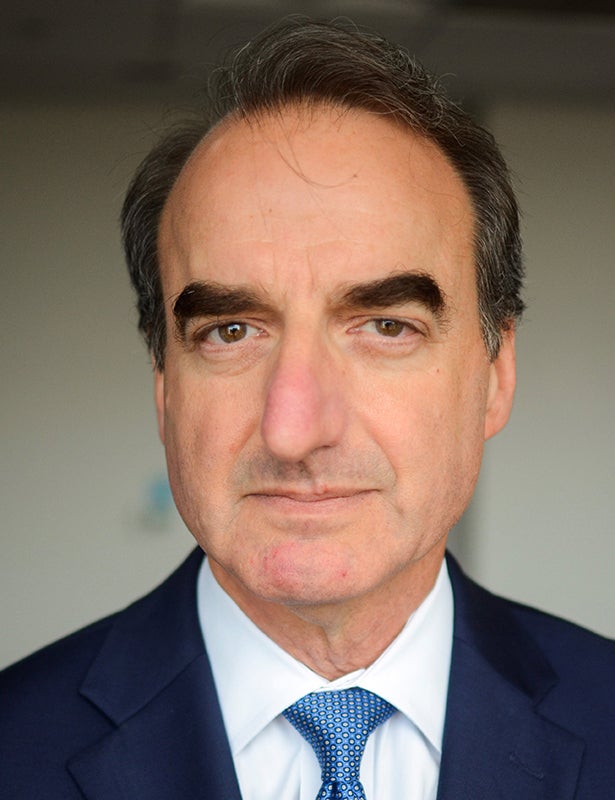
Jason Isaacson is AJC's Chief Policy and Political Affairs Officer.