May 14, 2026 — New York
This column appeared in AM NY.
By Jill Cofskey
Antisemitism is easy to denounce when it looks like history’s worst symbols. It becomes far harder, and more rare, when it is embedded in Israel discourse.
When swastikas were found scrawled on homes and synagogues in Forest Hills on Mothers’ Day, including a plaque honoring victims of Kristallnacht, condemnation was swift and unequivocal. These were unmistakable symbols of hate, and leaders treated them as such.
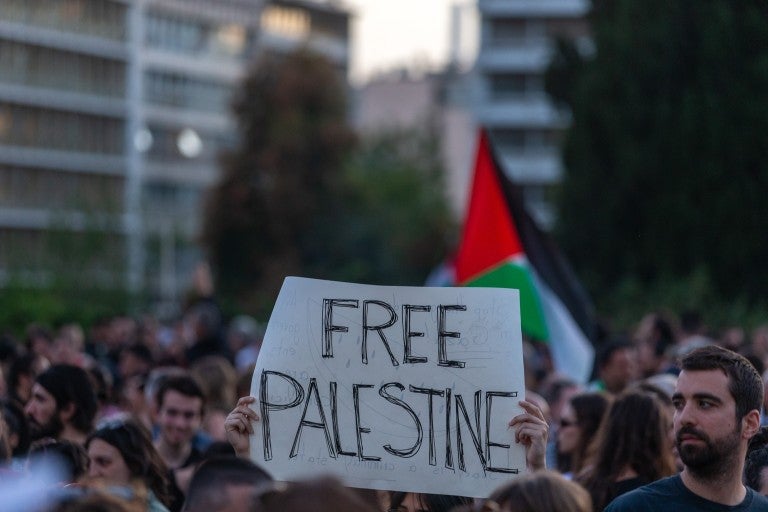
At last week’s protest outside Park East Synagogue, demonstrators waved a Hezbollah flag–in effect, glorifying a terrorist organization–and hurled blood libel at Jewish New Yorkers, calling them “Nazis,” “pedophiles,” and “baby killers.”
Waving the flag and using the language of terrorists to target a group of Jews at their place of worship and a community gathering center is not protest – it is intimidation and, in this case, a clear case of antisemitism.
Yet the public response was hesitant and muted.
Some defended the protestors, saying that they were merely criticizing Israeli policy.
While criticism of the Israeli government is not inherently antisemitic, too many people now insist that anti-Israel rhetoric never crosses into antisemitism, even when it plainly does.
Waving the flag of an organization that openly calls for violence against Israelis and has a long record of targeting Jewish civilians with lethal violence is itself an expression of that hate, not a neutral political statement.
For many Jewish New Yorkers, the problem is not just the incidents themselves. It is the response to them.
This clear pattern of harassment and targeting of our community is framed as isolated or debatable. The result is a growing sense among Jewish New Yorkers that our experiences and fears are being rationalized or treated as uniquely debatable, rather than met with the care and urgency they demand.
We cannot only publicly recognize and condemn antisemitism when it rears its ugly head in its most explicit and historically familiar forms. If, as a society, we are only willing to recognize anti-Jewish hatred once a swastika appears, we will continue to miss how it increasingly manifests now: through intimidation, conspiracy, collective blame, and rhetoric directed at Jews under the guise of political expression.
New Yorkers need more honesty about what is unfolding in front of us. Because when we only recognize antisemitism once it becomes impossible to ignore, we have already waited too long.
Jill Cofskey is the Alexander Assistant Director at AJC New York.