December 23, 2025
The following column originally appeared in the Miami Herald.
At Bondi Beach in Sydney, Australia, Jewish families had gathered on Dec. 14 to celebrate the first night of Hanukkah, a holiday of light, resilience and survival. Without warning, two gunmen — a father and son — sprayed bullets into the crowd, leaving 15 dead.
Those killed were targeted simply for being Jewish.
It was a painful reminder that antisemitism does not belong to history. It does not respect borders. When hatred is allowed to grow unchecked, it can erupt anywhere. These murders were not an isolated incident.
Jewish communities across the globe face a sharp rise in threats, vandalism, harassment and physical violence. Many synagogues have armed security, metal detectors and bulletproof glass. Jewish students report feeling unsafe in classrooms and on campuses. In too many places, Jews are once again asking whether it is safe to live openly as Jews.
This is why we must be clear: History is not an abstraction. It lives in the stories people carry and in the choices societies make when hatred surfaces.
That truth was powerfully illustrated at a recent American Jewish Committee National Human Relations Award Dinner in Miami, where the honoree, Joe Natoli, shared the story of his parents’ lives, forged in the darkest chapter of the 20th century. It offered a sobering warning for our own time.
Natoli’s mother was born in a small town in Belgium. She was 16 when the Nazis invaded in May 1940. Her adolescence unfolded under occupation — a world where fear governed daily life, food was scarce, neighbors turned on one another, and trust evaporated.
She watched Jewish children pulled from classrooms. She saw people disappear without explanation. One day, while caring for two young children on the streets of Brussels, she witnessed Nazi forces round up suspected members of the Belgian underground, line them up against a wall and execute them.
Yet even amid that terror, she also witnessed courage. Families with almost nothing shared what little they had. Ordinary people hid Jews in barns and cellars — not because it was safe or easy, but because it was the right thing to do.
At the same time, Natoli’s father — an 18-year-old from Borough Park, Brooklyn — enlisted in the Army. Like many of his generation, he rarely spoke about the war. But he did tell his children he was among the first American soldiers to enter the Bergen-Belsen concentration camp. What he witnessed revealed, in the starkest terms, where unchecked hatred leads.
These two lives — one shaped by occupation, the other by liberation — converged after the war. What emerged was a lesson Natoli shared with us: Kindness is not weakness. It is strength in its most human form.
Moral courage matters. Evil must be confronted early. That lesson has never been more relevant, especially after the massacre at Bondi Beach.
Antisemitism rarely begins with mass violence. It starts with words — with stereotypes repeated, lies left unchallenged and hatred minimized or excused. It grows when leaders hesitate to name it clearly, when societies look away and moral clarity gives way to moral relativism.
This is not solely a Jewish concern. Antisemitism is a warning sign for democratic societies. It undermines social cohesion, corrodes trust and threatens pluralism and equality. History shows that when Jews are targeted, broader societal fracture often follows. Here in South Florida, we understand the power of memory.
Our community is home to Holocaust survivors, their children and grandchildren. We know that “never again” is not a slogan — it is a responsibility.
As survivors pass from living memory, that responsibility shifts to us. The rise in antisemitic violence demands an answer. The choice before us is not between fear and hope — it is between complacency and courage. History has already shown us where complacency leads.
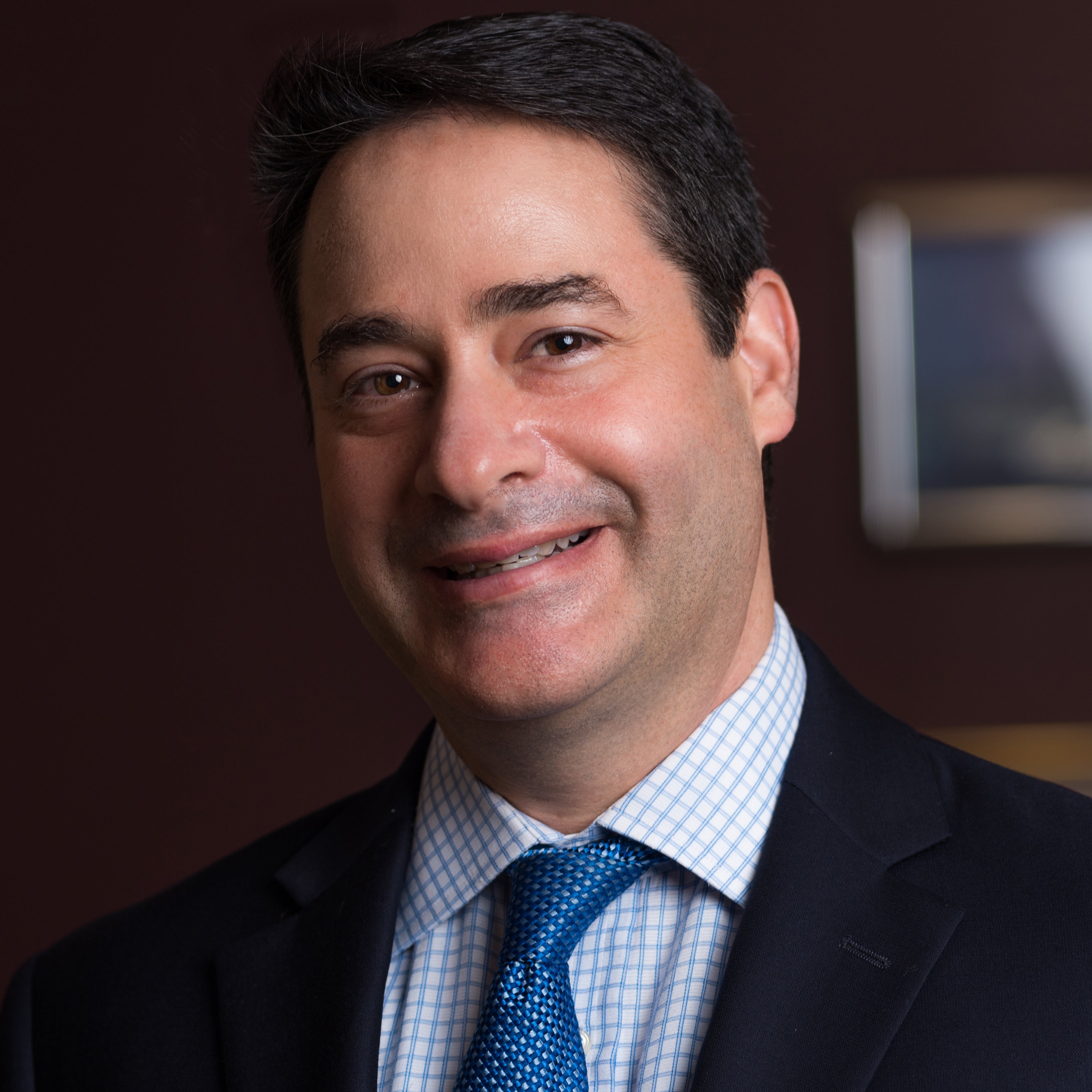
Brian Siegal is Director of AJC Miami and Broward.