September 24, 2026
This column appeared in E-Jewish Philanthropy.
For most of my professional career, late September and early October have meant one thing: the United Nations General Assembly. On its sidelines, the American Jewish Committee — my professional home for more than a decade — advocates for policies to counter antisemitism and strengthen Jewish communities around the world, advances Israel’s ties among nations and champions the democratic values that make free societies safer for all.
This year, our attention is also fixed on another upcoming date, one of profound significance on the Jewish calendar. This Simchat Torah, the AJC is inviting our community to join us in embarking on a year of Jewish learning.
Why is an advocacy organization inviting our advocates to engage in Torah study? And why now, after more than a century of a predominantly universalist and secular orientation?
Because the AJC believes that knowing what we are advocating for requires knowing who we are.
Let me be clear: This is not about prescribing religious observance, and we are not making a pivot from a global Jewish advocacy organization to a beit midrash. Rather, we are embracing a fundamental truth: Jewish advocacy is stronger when rooted in Jewish knowledge, and you cannot fully understand Jewish faith, history and identity without engaging with the texts that have carried us for 5787 years.
While Jewish literacy is not a replacement for advocacy, it is crucial if we want to be effective. When Jewish advocates find themselves engaging with Muslim partners or Catholic members of Congress who demonstrate a greater familiarity with Judaism’s foundational texts and ideas than they do, it exposes a profound and concerning gap in our Jewish communal investment. Our educational priorities as advocates can’t be limited to modern Israeli history and understanding antisemitic tropes. Increased Jewish literacy must be one of the core mechanisms in our advocacy toolbox.
Few in modern times so masterfully embodied the power of Torah to fuel advocacy as Rabbi Lord Jonathan Sacks z”l, who remarked, “The conclusion I have drawn from a lifetime lived in the public square is that non-Jews respect Jews who respect Judaism.”
The Torah itself offers the clearest roadmap for understanding the intersection of faith and advocacy.
We need not look further than where we are today, just ahead of Simchat Torah, as we reach the conclusion of the current Torah cycle. Towards the end of Deuteronomy, Moshe is preparing the Jewish people for one of our most formative chapters. The Israelites are on the precipice of entering the Land of Israel and will be embarking on this journey without Moshe, who in a painful turn, will not live to enter the Promised Land.
Moshe gathers all corners of the Jewish people during this transformative moment. In his address he offers one of my favorite lines from the Torah, “It [Torah] is not in heaven, that you should say ‘Who will go up to heaven for us and bring it to us so that we may hear it and keep it?’… It is in your mouth and in your heart for you to keep it.” (Deuteronomy 30: 12-14). Moshe is telling the Israelites that the Torah is not distant. It’s not some unreachable text that is only accessible through the prophets or from Heaven.
The rabbis took this idea one step further. In the Talmudic tractate of Bava Metzia, we find a heated debate over whether a particular type of oven from the Babylonian era should be considered ritually impure or not. Rabbi Eliezer fervently believes it is pure, while the other rabbis of the time say otherwise. Rabbi Eliezer calls upon miracle after miracle to prove that his interpretation of Jewish law is correct. Each time the miracle occurs, yet the other rabbis are unswayed, holding firm that their interpretation of the law is correct. Finally he calls a bat kol, a divine heavenly spirit, to prove that his interpretation is indeed correct. The heavenly voice declares the halacha in Rabbi Eliezer’s favor.
Rabbi Joshua responds with the very words Moshe tells the Israelites: “Lo bashamayim he“ — the Torah is not in heaven.” Once the Torah was given at Sinai, the rabbis teach us, its interpretation becomes a human responsibility. And in the most remarkable part of this Talmudic story, we learn that upon hearing Rabbi Joshua’s response, God himself smiles joyfully and says “My children have defeated me!”
The lesson is not that God and our Jewish texts have become irrelevant. It’s that Torah was given to us to wrestle with, interpret, teach and ultimately put into practice. It is our job to bring Torah down from the heavens and into the world. That is the work of advocacy and it is an obligation we must all embrace.
As American Jewish leaders and advocates commit themselves to gaining deeper knowledge of Torah, others who are already steeped in its teachings should not extricate themselves from the responsibility of activism. Advocacy is not a merely secular responsibility to be pursued by other Jews. Jewish communities who prioritize Torah must understand the intersection of faith and advocacy to engage effectively in their communities. This moment demands that Jews of all backgrounds choose action. The issues facing us are too significant to leave them to others.
At the end of Deuteronomy, Moshe also shares one of the Torah’s final commandments: hakhel. He instructs the Israelites to assemble the entire community — men, women, children, people from all walks of life — to hear the reading of the entire Torah. The Israelites are then commanded to do this public reading of the Torah — hakhel – every seven years.
It’s a profound commandment. We inherit a covenant from God, but also from those who came before us. And we are responsible for carrying it forward. That is why Jewish learning is not simply an investment in the individual; it is an investment in continuity and community.
This is why we know at the AJC that engaging in Torah learning is not a departure from our mission — it is a deepening of it.
That deepening coincides with an ongoing reckoning within our community. The once joyous Simchat Torah during which we celebrate the Jewish people concluding the annual Torah-reading cycle is now also wrapped in a shroud of grief. Our post-Oct. 7 world has seen reverberations that include a growing sense of peoplehood, interest in faith and demand to deepen Jewish literacy. Partnered with this is our ongoing dedication to honor the victims of Hamas’ brutal terrorist attack. While we work to ensure our own government and countries around the globe do just this, we too will show another form of honoring them by dedicating our very learning in their honor.
Our history has shown us that Jewish revival and rededication to learning are greatest in our darkest times. Following the destruction of the Second Temple, we gained the Babylonian Talmud. Following the Holocaust, we gained some of the greatest Jewish thinkers of modern time: Rabbi Joseph Soloveichik, Rabbi Abraham Joshua Heschel, Nechama Leibovitz, the Lubavitcher Rebbe, Rabbi Lord Jonathan Sacks. In the wake of Oct. 7, 2023, we find ourselves today with innovative centers of Jewish learning created at a moment of deep challenge for our people. Among those using creative models for learning are the Simchat Torah Challenge, Rabbi Sacks Legacy and Hadar; the AJC will partner with them to bring their Torah expertise to our community and to bring those connected to Torah into our advocacy.
I invite you to join us in our own form of hakhel, fulfilling a millennia-old commitment to learning. While this commandment falls at the end of the Torah, closer to the beginning of the Torah cycle, we find another critical moment. When the Israelites receive the Torah, they declare “naaseh vi nishmah — we shall do, and we shall understand.” Generations of commentators have explored what this language teaches us about covenant. One interpretation that resonates deeply: As Jews we must be a people driven foremost by doing — not merely hearing or understanding. We learn so we can act, and we act because we have learned.
We are encouraging our community to gather, to learn and to act, because our next chapter in Jewish history cannot be shaped by this moment alone. It must be rooted in the texts, principled action, and the covenant that has shaped our people.
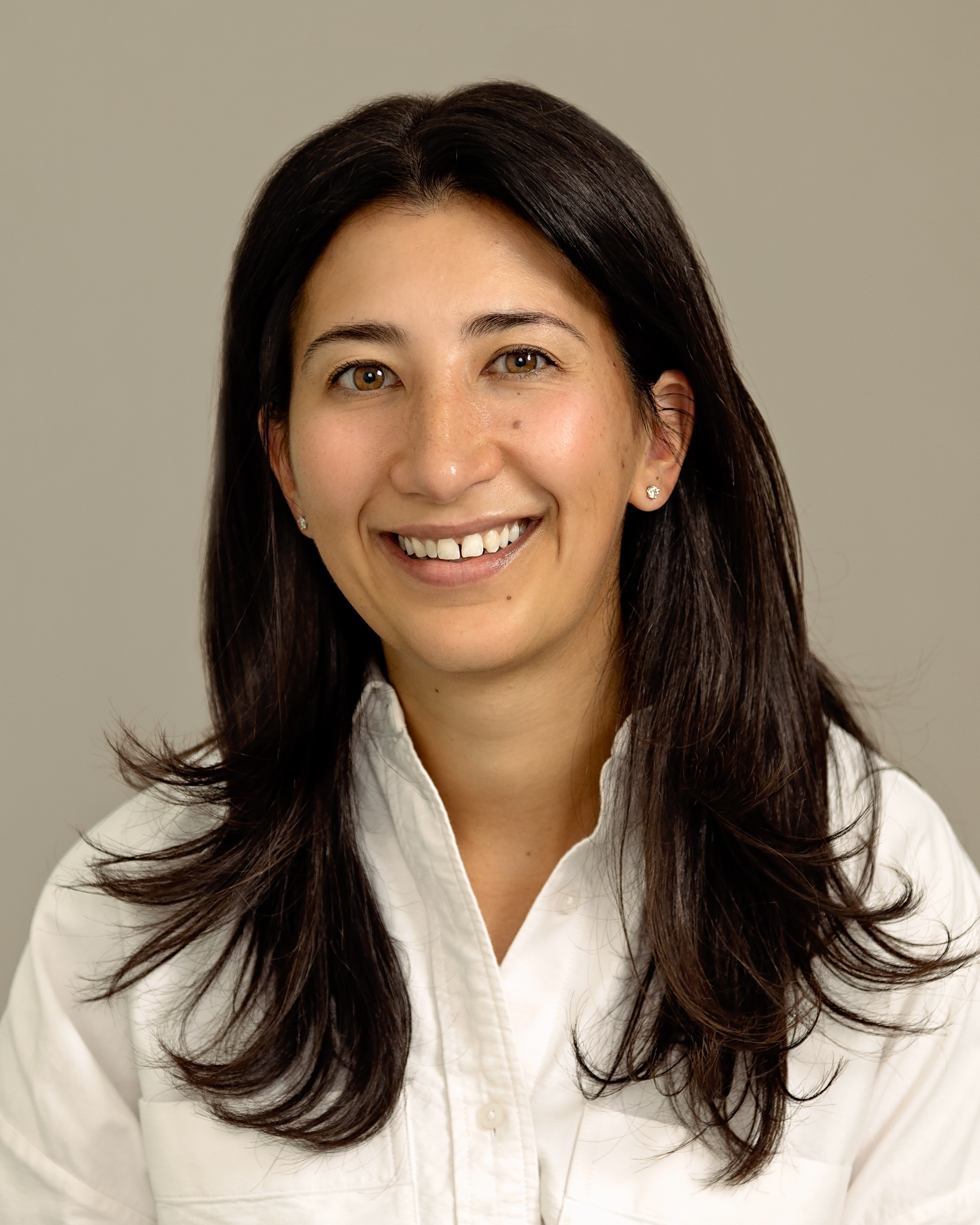
Meggie Wyschogrod Fredman is AJC U.S. Director of Jewish Communal Engagement and Partnerships.