November 11, 2026
This column originally appeared in the Atlanta Jewish Times.
Sometimes the most powerful thing you can do is simply listen. Listen to learn. Listen to understand. Listen to show that you value what another person is saying.
That doesn’t mean you have to agree with everything you hear. But to do it right, you need to listen without rushing to prepare a rebuttal.
As Atlanta Director of American Jewish Committee, I advocate and build coalitions that can work together toward policy and change. We aim to work across racial, faith, and ethnic communities to ensure hate doesn’t take root in our city.
Last month, I joined 450 civic, religious, education, and political leaders at “Together at the Crossroads: A Congress for Allyship and Unity,” a conference held in Denver by the David Merage Foundation for Confronting Antisemitism.
More than 70 percent of the participants were not Jewish. That matters. Because one message came through again and again: there is power in our differences.
Too often, when confronted with difference, we try to minimize it in search of unity. But unity built by smoothing over our differences is shallow. It may create short-term, interest-based alliances, but it does not build the trust necessary for a real and lasting coalition.
Such coalitions start when we are willing to share our true selves and offer ourselves honestly. But honesty requires safety. Safety requires accepting that we can be different without being enemies. That begins with listening.
Truly hearing someone not only allows us to better understand our differences, it creates space to hear and understand one another’s struggles, even when they are not our own.
In Denver, I heard the genuine pain expressed by a Black woman sitting at my table when, in response to me saying that Israel is seen as a place of belonging and safety for Jews, she replied, “I don’t have that place.”
I heard the struggle of a close Latino ally and friend, who is facing hostility from some in his community over his support for Israel and the Jewish people. I honored what they shared with me, their honesty and vulnerability, by sharing some of my own challenges.
Perhaps that is where real coalition begins: not with asking someone to stand with us, but with understanding what they are carrying and sharing with them a sense of our burdens.
I sometimes wonder whether the Jewish community has gotten a little stuck in our own pain. The magnitude and trauma of Oct. 7 and the tidal wave of antisemitism that followed in its wake were so powerful that we turned inward or demanded that others stand with us because of what we had been through.
We were so overwhelmed by our own suffering and distress that we forgot to really listen to others, and understand that sometimes our differences, or the challenges others were facing themselves, did not allow them to connect and respond in the ways we wanted. And so, we felt betrayed and abandoned.
However, if we truly listen, perhaps we could build the connections necessary to stand together again in a meaningful way. Real allyship isn’t transactional, and it isn’t shallow. It requires vulnerability on both sides to build the kind of trust that can withstand tough challenges. It requires creating space for differences of opinion and identity and action; it demands a lot of grace and understanding.
We don’t need to erase our differences to stand together. Rather, we need friendships strong enough to hold them. Maybe that starts with the simplest thing of all: really listening to one another.
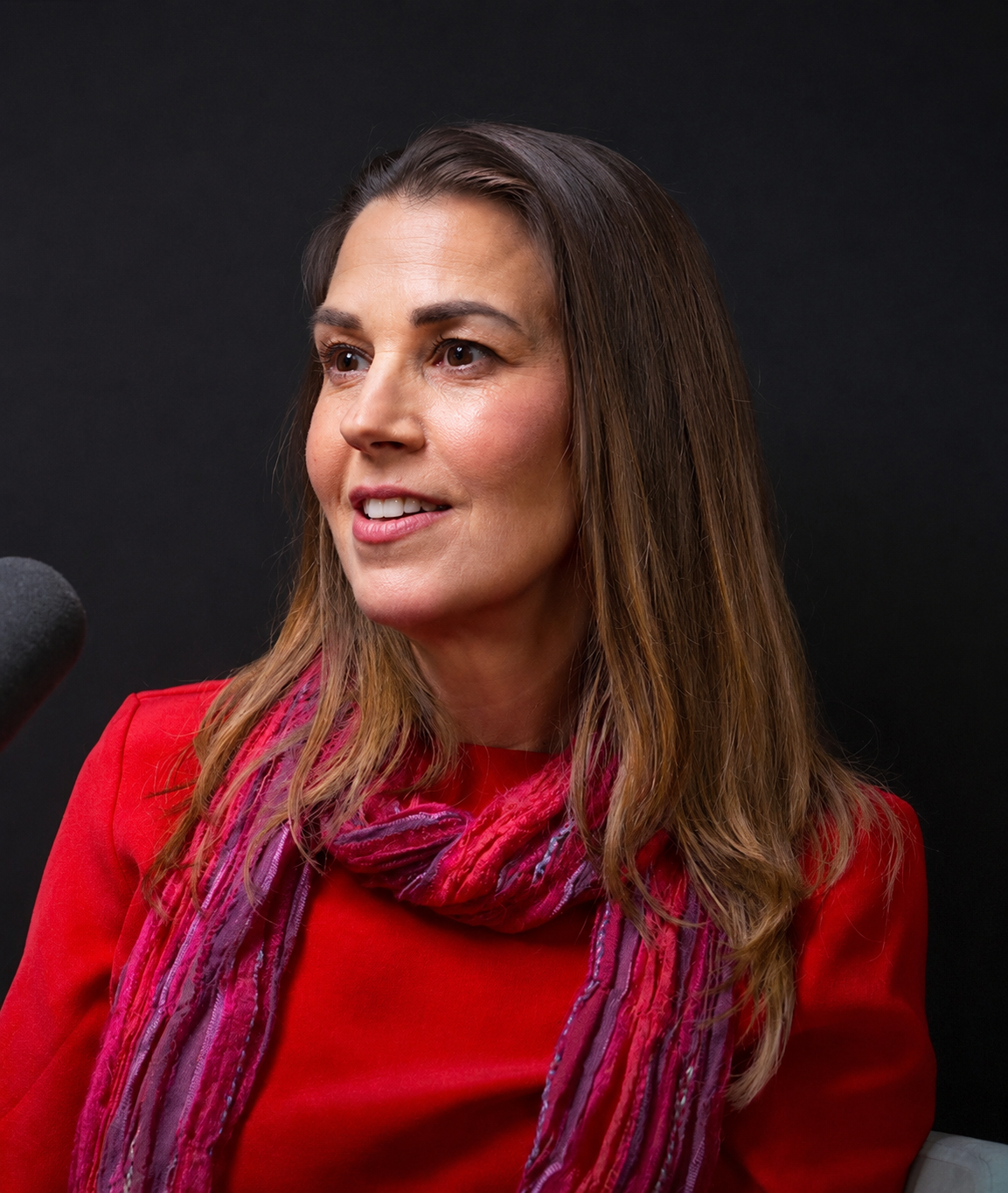
Sharon Goldman is Director of AJC Atlanta.