From local municipal elections to state and national elections, electoral participation is foundational to thriving democracies. Schools play a vital role in nurturing that participation by building civic awareness, modeling democratic values, and enabling constructive conversations about current events.
However, election cycles can be challenging for schools. Intense political discourse can foster divisiveness, and students (and sometimes faculty) may bring personal politics, misinformation, and polarizing rhetoric from home and social media into classrooms. Contentious elections are fertile ground for conspiratorial, binary thinking and oversimplified narratives—the same patterns that fuel and normalize antisemitism.
AJC’s Center for Education Advocacy (CEA) collaborates with school leaders to foster educational environments that promote critical thinking and inclusivity for all identities, including Jewish students, faculty, and families, while firmly rejecting antisemitism.
This guidance includes best practices for K-12 administrators to support teaching about elections while ensuring teacher political neutrality, fostering dialogue about critical issues, and addressing antisemitic or inflammatory rhetoric that may surface during campaigns.
AJC is a 501c3 non-partisan organization that does not endorse candidates, but speaks out when public figures use rhetoric or endorse policies that harm Jews.
WHY TEACH ABOUT ELECTIONS
Democracy Requires Educated Citizens
- Students need to understand how elections work, why they matter, and how to evaluate candidates and policies, preparing them to participate responsibly as future voters in democratic processes.
- Critical thinking about political issues strengthens civic engagement and democratic institutions.
Elections Provide Real-World Learning
- Elections make abstract civics concepts concrete and relevant. They emphasize the important role each of us plays in finding solutions to difficult community problems.
- Elections offer opportunities for skill-building through analyzing primary sources, evaluating arguments, and practicing civil discourse.
- Election cycles create teachable moments about media literacy, rhetoric, and persuasion.
Antisemitic Discourse Frequently Appears in Campaigns
Historically, election cycles have triggered antisemitic rhetoric, including:
- Conspiracy myths about Jewish control of media, banks, or government (e.g., Faculty union targets Jewish political money).
- “Dual loyalty” accusations (e.g., questioning if Jews can be “loyal Americans” or pressuring Jews to vote a certain way).
- Scapegoating Jews for social, economic, or political problems (e.g., blaming for a candidate’s victory or loss, pre-emptively, or post-election).
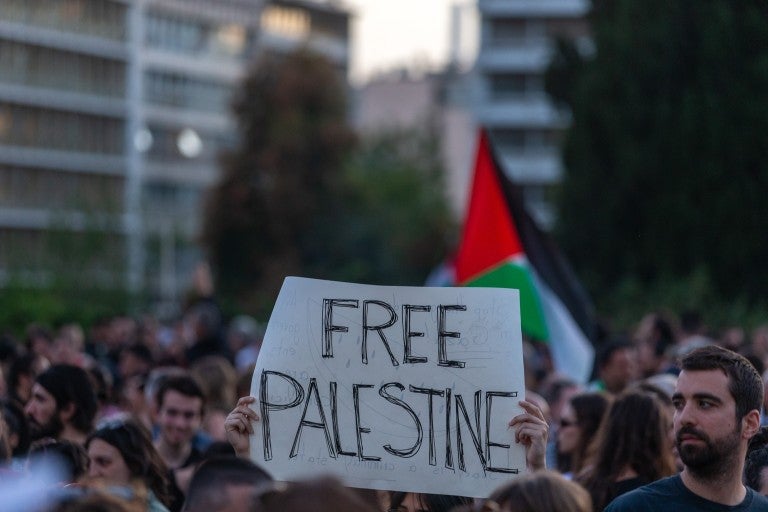
- Using language that claims to be political criticism of the State of Israel but is actually discourse that demonizes Israelis, Zionists, and Jews and has resulted in discrimination, harassment, or violence against those with these identities.
- Coded antisemitic language or imagery that perpetuates harmful stereotypes.
Educators can help students identify, question, and disrupt these narratives. For a deeper dive into common antisemitic tropes that arise in elections, please see AJC’s A Candidate’s Guide to Antisemitism in American Politics.
ACTION STEPS
Establish Guidelines for Faculty and Staff
- Clearly delineate policies that prohibit the display of partisan political symbols, slogans, or candidate endorsements in classrooms or on school grounds, except when such materials are used for specific, nonpartisan, educational purposes.
- Require neutral facilitation of political discussions, presenting multiple perspectives without revealing personal preferences.
- Remind faculty that they should never engage with students on social media and that their online rhetoric affects school culture and can undermine students’ sense of belonging.
- Address violations consistently and promptly.
Prepare Teachers to Facilitate Election Discussions
- Frame election education as essential civic preparation, not partisan activity.
- Provide professional development on facilitating politically sensitive discussions using fact-based inquiry and primary sources that will help students develop the analytical skills that they will need as future voters.
- Ensure teachers know how to create space for multiple viewpoints while maintaining respectful dialogue. Clarify that students may express their political views within the bounds of respectful discourse; faculty, however, should remain politically neutral in their professional roles.
- Equip faculty to recognize and address anti-Jewish tropes in political rhetoric. Do not ignore or minimize antisemitic statements, even from major candidates or political figures.
Ensure Digital Citizenship Education
- Teach students how to identify misinformation, conspiracies, and biased sources.
- Explain how social media algorithms promote extreme content and hate speech. This can include professional development for faculty on how to teach responsible digital citizenship.
- Remind students that AI-generated images, videos, and audio (‘deepfakes') are designed to look convincing, and they should not assume online content is authentic simply because it appears realistic.
- Encourage students to “build their feed” by following and interacting with trustworthy, respected accounts. Explain that interacting with and elevating responsible and fact-based content and pages is an excellent way to fight mis- and disinformation online.
- Encourage students to evaluate claims critically and seek multiple sources to verify, including corroborating reports.
Support Student and Faculty Well-being
- Check in with Jewish students, faculty, and affinity groups during election seasons.
- Provide structured, facilitated settings for students to discuss concerns.
- Ensure mental health resources are available.
- Make it clear that no form of harassment or hate will be tolerated in school.
Communicate with Parents and Families
- Explain how elections will be taught as citizenship preparation, not indoctrination.
- Communicate policies on faculty neutrality and student expression.
- Address how the school responds to inflammatory or antisemitic political rhetoric.
- Remind the school community that political diversity exists within all communities, including the Jewish community.
Review Student Codes of Conduct
- Clarify the rules on political expression, protests, and walkouts, including how the school handles inflammatory political speech by students, both in school and online.
- Ensure policies and protocols are transparent and applied consistently to all students, regardless of political viewpoint.
Analyze Candidate Statements as a Teaching Tool
- Focus on analyzing rhetoric and positions, not endorsing or condemning candidates as people.
- Emphasize critical thinking skills that students can apply to any political discourse.
- Use specific examples to teach students how to identify problematic language (e.g., “From the river to the sea”, “Globalize the Intifada,” conspiracies about Jewish control, accusations of dual loyalty).
- If a candidate’s rhetoric is antisemitic, name it clearly while maintaining educational focus.
- Connect antisemitic statements to broader patterns (tropes, scapegoating, conspiracies) throughout history.
TIMELINE
At the start of the school year:
Communicate codes of conduct; offer faculty professional development.
As election season begins:
Proactively communicate the school's mission and commitment to respectful dialogue, reaffirming that all students are expected to feel safe and welcome regardless of political differences. Explain how elections will be taught as citizenship preparation; clarify policies on political speech on school grounds; check in with affinity groups.
During election season:
Monitor discourse for harassment, intimidation, or antisemitic rhetoric; provide processing opportunities for students; redirect discussion toward civic learning; enforce policies.
After elections:
Prepare faculty for emotionally charged classrooms the next day, as students may feel excitement, disappointment, fear, or uncertainty. Reinforce that classrooms are spaces for learning, not for celebrating or mourning election outcomes. Debrief with faculty and students on any incidents; evaluate policies for future cycles.
WE ARE HERE TO HELP
AJC recognizes that every school community is different and has distinct needs. AJC’s Center for Education Advocacy is your partner in fostering a deeper understanding of the Jewish people, combating antisemitism, and helping build school environments resilient against all forms of hate. Find our most current resources on our Campus Resource Hub. For consultation, educational programming, recommendations on trusted curricular providers, or to discuss specific challenges your school is facing, please contact us: [email protected].